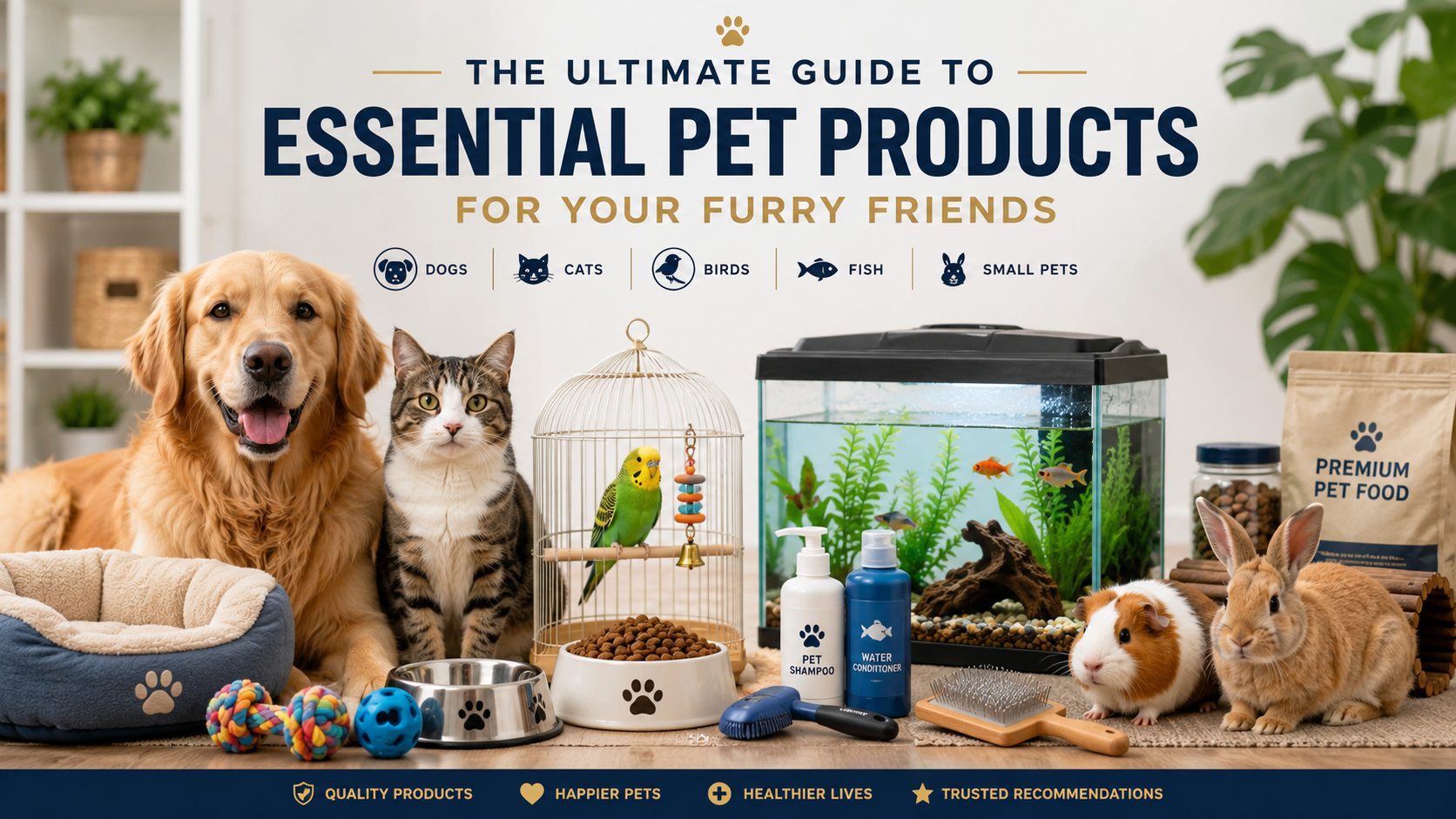
Every pet deserves products that make daily life safer, healthier, and more comfortable. But with thousands of pet products available, it can be difficult to know what your companion actually needs—and what can simply stay on the shelf.
The best approach is not to buy everything. It is to build a practical collection of products that matches your pet’s species, size, age, lifestyle, environment, and individual needs.
Whether you share your home with a dog, cat, bird, fish, rabbit, guinea pig, hamster, or another small companion, this guide will help you understand the essential product categories worth considering and how to choose them wisely.
For carefully selected recommendations across different pet categories, visit our Pet Products collection.
What Are Essential Pet Products?
Essential pet products are the everyday items that help provide food, water, shelter, comfort, hygiene, enrichment, safety, and appropriate care.
The exact products vary from one pet to another.
A dog may need a comfortable bed, feeding bowls, grooming tools, a leash, and toys. A cat may need a litter setup, scratching products, feeding supplies, grooming tools, and enrichment. Birds need appropriate cages, perches, feeding supplies, toys, and habitat accessories. Fish depend on a properly maintained aquarium with suitable filtration, lighting, water-care products, and food.
Small pets such as rabbits, guinea pigs, hamsters, and chinchillas also have specialized habitat, feeding, bedding, grooming, and enrichment needs.
The most important principle is simple:
Choose products for the pet you actually have—not simply products that happen to be popular.
1. Feeding and Water Supplies
Food and fresh water are among the most basic needs of every pet, but feeding equipment should still be chosen with care.
Dogs and Cats
Dogs and cats generally need sturdy food and water bowls that are appropriately sized for them. Some pets may benefit from slow-feeding bowls, elevated feeding solutions, or automatic feeders depending on their routine.
Birds
Birds need secure food and water containers that fit their habitat and can be cleaned easily.
Fish
Fish have completely different feeding requirements. Their care centers around species-appropriate aquarium food, appropriate feeding routines, and maintaining suitable water conditions.
Small Pets
Rabbits, guinea pigs, hamsters, and other small pets may require food dishes, hay feeders, water bottles, or other feeding equipment designed specifically for their habitats.
When choosing feeding products, look for:
-
Appropriate size
-
Safe and durable materials
-
Easy cleaning
-
Stable construction
-
A design suitable for your pet’s feeding habits
2. Comfortable Beds and Resting Areas
Rest is just as important as activity.
Dogs may benefit from supportive beds that give them enough room to stretch out, especially larger, older, or less mobile dogs.
Cats often appreciate soft beds, enclosed resting spaces, window perches, or quiet sleeping areas where they can retreat.
Birds need appropriate perches and a comfortable habitat rather than a conventional pet bed.
Fish benefit from a well-designed aquarium environment that includes safe hiding places and suitable habitat features.
Small pets often need species-appropriate bedding, nesting material, hides, and enough space to rest comfortably.
The right resting product should provide comfort without creating unnecessary safety risks.
For dog-specific bed recommendations, you can explore our Dog Products collection.
3. Grooming and Hygiene Products
Grooming products help many pets stay clean and comfortable while giving owners an opportunity to notice changes in their coat, skin, nails, ears, or general condition.
Dogs may need brushes, combs, nail-care tools, shampoos, dental-care products, and other grooming supplies depending on their coat and lifestyle.
Cats may also benefit from regular brushing, nail care, and appropriate dental or hygiene products. Long-haired cats often have different grooming requirements from short-haired cats.
Birds require a more specialized approach. Habitat cleanliness, suitable perches, and proper environmental care are generally much more important than treating bird grooming like dog or cat grooming.
Fish require an entirely different hygiene routine involving aquarium cleaning, filtration, water conditioning, and regular maintenance.
Small pets may require regular habitat cleaning, appropriate bedding, and grooming products depending on the species.
For more focused grooming information, see our Dog Grooming resources.
4. Toys, Play, and Enrichment
Pets need opportunities to explore, play, exercise, and express natural behaviors.
Dogs
Dogs can benefit from chew toys, interactive toys, fetch toys, puzzle toys, and other enrichment products. The right choice depends on the dog’s size, age, chewing strength, and play style.
Cats
Cats often enjoy toys that encourage chasing, stalking, batting, climbing, and exploration.
Birds
Birds can benefit from safe toys and habitat accessories that encourage climbing, movement, chewing, and mental stimulation.
Fish
Fish enrichment is more closely related to their aquarium environment. Safe plants, hiding places, substrate, and suitable decorations can help create a more interesting habitat.
Small Pets
Small pets may enjoy tunnels, chew-safe toys, hides, treat puzzles, and other enrichment products suited to their species.
Safety should always come before novelty. Inspect toys and enrichment products regularly and remove anything that becomes damaged.
For dog-specific play and enrichment recommendations, visit Dog Toys.
5. Collars, Harnesses, Carriers, and Travel Supplies
Some pet products become especially important when you leave home.
Dogs may need a suitable collar or harness, leash, identification accessories, and a secure travel solution.
Cats commonly need a secure carrier for veterinary visits and travel.
Birds should be transported in a secure carrier or travel cage designed for them.
Small pets may also require suitable carriers when traveling or visiting a veterinarian.
When choosing travel and restraint products, pay attention to:
-
Proper fit
-
Secure closures
-
Appropriate size
-
Ventilation where necessary
-
Strength and durability
-
Comfort during transport
Never choose a restraint product solely because it looks attractive. It must perform its safety function reliably.
6. Habitat and Environment Products
For some pets, the habitat is one of the most important purchases you will make.
Dogs and cats live alongside their owners but still benefit from dedicated spaces such as beds, crates, scratching areas, feeding stations, and enrichment zones.
Birds depend heavily on the quality of their cage or habitat. Perches, food and water areas, toys, spacing, and cleaning access all matter.
Fish require a properly planned aquatic environment. Aquarium size, filtration, heating when necessary, lighting, water conditioning, substrate, decorations, and maintenance supplies all work together.
Small pets need suitable habitats with enough room for movement, appropriate bedding, hides, feeding equipment, and enrichment.
A habitat should be considered as a complete environment rather than a collection of unrelated accessories.
For fishkeepers, our Fish Products collection can help you explore aquarium-related essentials.
7. Products for Birds and Small Pets
Smaller or less commonly discussed companion animals often have very different requirements from dogs and cats.
Bird owners should prioritize species-appropriate cages, food, perches, toys, feeding equipment, and habitat accessories.
Small-pet owners may need products such as:
-
Suitable habitats and enclosures
-
Bedding
-
Hay and appropriate food
-
Water supplies
-
Feeding dishes
-
Hides and tunnels
-
Chew-safe enrichment
-
Species-appropriate accessories
For small animals in particular, avoid assuming that a product marketed for one species will automatically be suitable for another.
When shopping for a small companion, choose products designed specifically around that animal’s size, behavior, diet, and habitat requirements.
Our Small Pet Essentials section is a useful place to explore these specialized needs.
8. How to Choose High-Quality Pet Products
Price is only one part of the buying decision.
A better product-selection process looks at several factors.
Safety
Choose products made from appropriate materials and designed for the species that will use them.
Correct Size
Beds, bowls, toys, carriers, harnesses, cages, and habitats all need to fit the pet correctly.
Durability
Products used every day should be strong enough to withstand normal wear.
Ease of Cleaning
Feeding supplies, beds, grooming tools, habitat accessories, and toys should be reasonably easy to maintain.
Practical Design
A product should solve a real problem rather than simply look impressive.
Customer Feedback
Verified customer reviews can reveal recurring strengths and weaknesses that are difficult to see from product photos alone.
Species-Specific Design
This is especially important for birds, fish, rabbits, guinea pigs, hamsters, and other animals with specialized requirements.
9. Avoid Buying Products Simply Because They Are Popular
A highly rated product is not automatically the right product for every animal.
A powerful chew toy may be appropriate for one dog but unsuitable for another. A grooming brush that works beautifully for a long-haired cat may be unnecessary for a short-haired cat.
Likewise, aquarium equipment must match the size and requirements of the aquarium, while small-pet habitats must be appropriate for the species living inside them.
Before buying, ask:
Does my pet actually need this?
Is it designed for my pet’s species and size?
Will it make daily care easier, safer, or more comfortable?
If the answer is no, you probably do not need it.
10. Create a Practical Pet-Product Collection
You do not need to buy everything at once.
A practical starting collection might include:
Daily essentials: food, water supplies, and appropriate feeding equipment.
Comfort: a suitable sleeping area or habitat.
Hygiene: grooming and cleaning supplies appropriate for the species.
Enrichment: safe toys or habitat accessories.
Safety: appropriate restraints, carriers, or habitat equipment.
Maintenance: cleaning supplies and replacement items.
Once those basics are covered, you can add products based on your pet’s individual preferences and lifestyle.
Recommended Pet Product Categories
Every pet has different requirements, so the best place to continue shopping depends on the animal you care for.
Dogs
Explore our Dog Products collection for beds, toys, grooming supplies, feeding products, treats, training products, travel accessories, and other dog essentials.
Cats
Explore our Cat Products collection for cat food, treats, grooming products, toys, beds, feeding supplies, health products, travel accessories, and other feline essentials.
Birds
Explore our Bird Products collection for bird food, cages and habitats, toys, feeding supplies, grooming and care products, travel carriers, and accessories.
Fish and Aquarium Care
Explore our Fish Products collection for fish food, aquariums, water conditioners, filters, heaters, lighting, and other aquarium essentials.
Small Pets
Explore our Small Pet Essentials collection for habitat, bedding, food, enrichment, and everyday-care products designed for smaller companion animals.
You can also browse the full PawTroveHub Products collection when you want to explore recommendations across multiple pet categories.
When Should Pet Products Be Replaced?
There is no single replacement schedule for every product.
Inspect frequently used items and replace them when they become:
-
Damaged
-
Excessively worn
-
Difficult to clean
-
Unsafe
-
Too small for a growing pet
-
No longer suitable for the pet’s needs
Pay particular attention to toys, feeding equipment, bedding, grooming tools, carriers, and habitat accessories.
Replacing worn products before they become dangerous is an important part of responsible pet care.
Frequently Asked Questions
What pet products should I buy first?
Start with the items your pet needs every day: appropriate food, fresh-water supplies, a suitable resting or living environment, and basic products for safe daily care. Add grooming, enrichment, travel, and other accessories according to your pet’s individual needs.
Do dogs, cats, birds, and fish need the same products?
No. While some general needs overlap, each species has very different physical, behavioral, dietary, and environmental requirements. Always choose products based on the animal that will actually use them.
Are expensive pet products always better?
No. The best product is the one that combines appropriate design, safety, durability, usability, and value. A higher price alone does not guarantee better performance.
How do I choose the right size?
Check the manufacturer’s sizing information and consider your pet’s current size, weight, age, and expected growth. This is especially important for beds, harnesses, carriers, cages, habitats, and toys.
How often should pet products be replaced?
Replace products whenever they become damaged, unsafe, excessively worn, or unsuitable for your pet. Inspect frequently used items regularly rather than relying on a fixed replacement date.
Should I buy products for every category?
Not necessarily. Build your collection around your pet’s actual needs. A simple set of useful, safe products is better than a large collection of items your pet rarely uses.
Final Thoughts
The best pet products are not necessarily the most expensive or the most popular. They are the products that genuinely fit your pet’s needs and make everyday care safer, easier, and more comfortable.
Start with the basics. Think about your pet’s species, size, age, lifestyle, environment, and natural behaviors. Choose products that are practical, durable, safe, and easy to maintain.
Most importantly, remember that responsible pet care is not about owning everything—it is about having the right products for the pet you love.
Ready to explore carefully selected recommendations? Visit the PawTroveHub Products page and choose the category that best matches your companion.