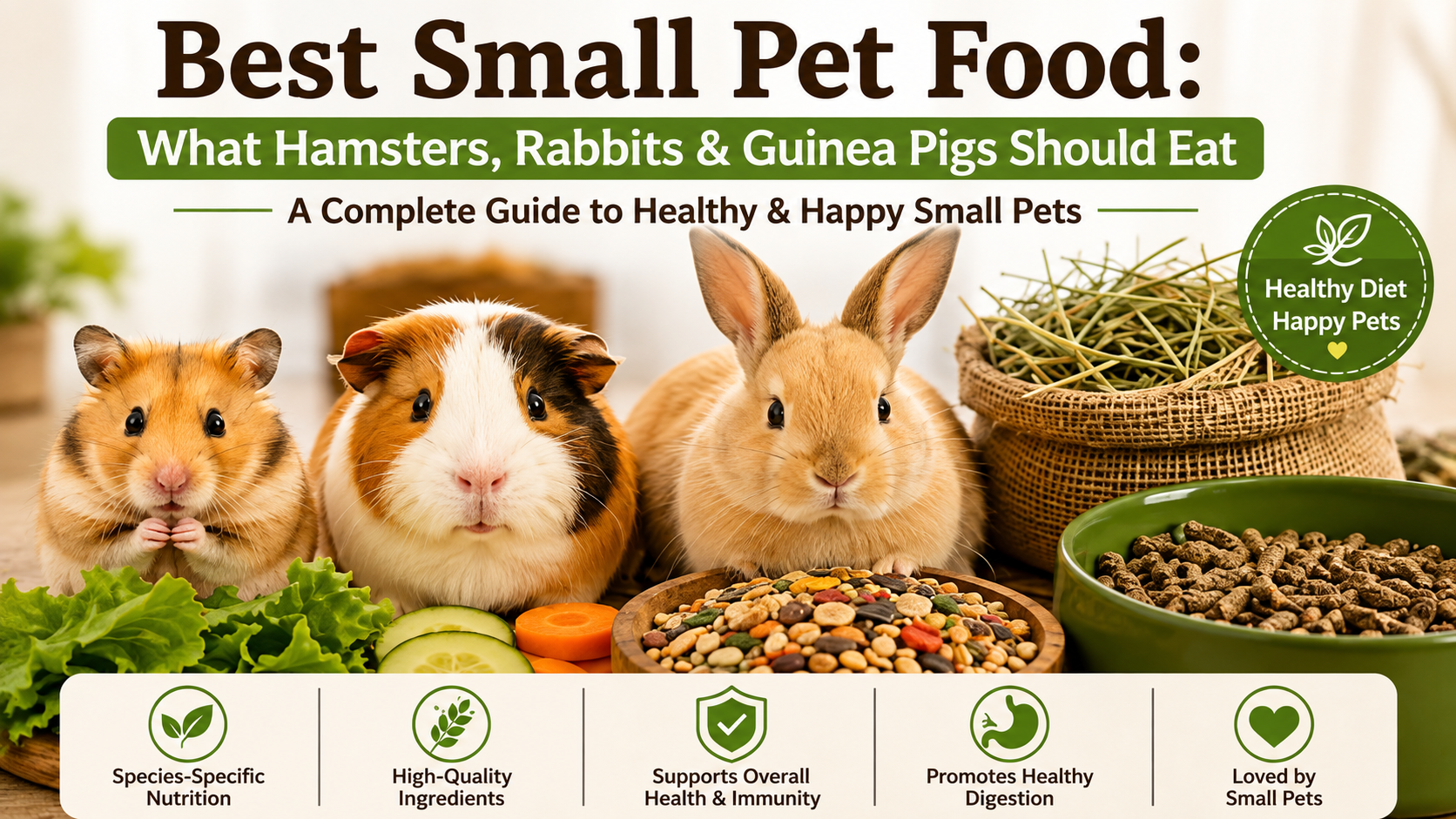
Choosing the best small pet food isn’t as simple as picking a bag labeled “small animal food.” Hamsters, rabbits, guinea pigs, gerbils, and other small pets have different nutritional needs, so the right food depends on the species, age, lifestyle, and overall diet of your pet.
A healthy feeding routine should provide the nutrients your pet needs without relying too heavily on treats, sugary ingredients, or foods that aren’t appropriate for its species.
In this guide, we’ll explain what hamsters, rabbits, and guinea pigs should eat, how to choose better small pet food, the role of hay and pellets, common feeding mistakes, and some small-pet food options available through PawTroveHub.
What Is the Best Small Pet Food?
The best small pet food is appropriate for the specific species and used as part of a balanced overall diet.
There isn’t one food that is ideal for every small pet. Rabbits and guinea pigs are herbivores with diets centered around high-fiber foods and hay, while hamsters have different nutritional needs.
Before buying a food, consider:
- Your pet’s species
- Age and life stage
- Fiber requirements
- Protein and fat requirements
- Whether the food is intended as a complete diet, supplement, hay, or treat
- Ingredient quality
- Freshness and storage
- What else your pet eats each day
The most important rule is simple: choose food formulated for your pet rather than assuming one small-animal food works for every species.
What Should Rabbits Eat?
Rabbits are herbivores with a specialized digestive system, and fiber is one of the most important parts of their diet.
For healthy adult rabbits, good-quality grass hay should be available freely. A measured amount of appropriate rabbit pellets and suitable fresh vegetables can complement the hay, while fruit should generally be limited to occasional treats.
The Merck Veterinary Manual explains that adult rabbits need a high-fiber diet and recommends unlimited grass hay along with appropriate pellets, fresh vegetables, and constant access to clean water.
Key foods for rabbits
A healthy adult rabbit diet generally includes:
- Unlimited good-quality grass hay
- A measured amount of species-appropriate pellets
- Suitable leafy greens and vegetables
- Fresh, clean drinking water
- Fruit only as an occasional treat
Rabbits at different life stages can have different nutritional requirements. Young, pregnant, or nursing rabbits may require a different feeding approach, so individual circumstances matter.
Rabbit food available through PawTroveHub
Kaytee Fiesta Rabbit Food is one of the rabbit-specific options available through PawTroveHub.
View Kaytee Fiesta Rabbit Food on Amazon
For more options, you can also compare the products in our dedicated category:
Explore Small Pet Food at PawTroveHub
What Should Guinea Pigs Eat?
Guinea pigs are herbivores and need a diet built around high-fiber foods, hay, appropriate pellets, fresh vegetables, and a reliable source of vitamin C.
One important difference between guinea pigs and rabbits is vitamin C. Guinea pigs cannot produce their own vitamin C, so they need to obtain it through their diet. Veterinary guidance recommends guinea pig-specific food rather than simply substituting rabbit food.
Key foods for guinea pigs
A balanced guinea pig diet generally includes:
- Unlimited good-quality grass hay
- Appropriate guinea pig pellets
- Fresh vegetables and leafy greens
- A reliable dietary source of vitamin C
- Fresh drinking water
- Limited fruit as an occasional treat
The exact diet should also take the guinea pig’s age and life stage into account. Young, pregnant, and nursing guinea pigs can have different nutritional requirements.
Guinea pig food available through PawTroveHub
Vitakraft Menu Premium Guinea Pig Food is one of the guinea pig food options available through PawTroveHub.
View Vitakraft Menu Premium Guinea Pig Food on Amazon
Another option is Kaytee Forti-Diet Pro Health Guinea Pig Food.
View Kaytee Forti-Diet Pro Health Guinea Pig Food on Amazon
For additional guidance on guinea pig nutrition, the Merck Veterinary Manual explains the importance of grass hay, species-specific pellets, fresh vegetables, and dietary vitamin C.
What Should Hamsters Eat?
Hamsters have different nutritional needs from rabbits and guinea pigs.
A hamster’s diet should provide appropriate nutrition from a balanced food rather than allowing the animal to eat only its favorite ingredients.
UC Davis School of Veterinary Medicine specifically warns about selective feeding with seed-and-pellet mixtures because hamsters may preferentially consume certain seeds while leaving other nutritionally important components behind.
What to look for in hamster food
When choosing hamster food, consider:
- A formulation intended for hamsters
- Appropriate protein and fat
- Suitable fiber
- A nutritionally balanced base diet
- Limited excessive sugar
- A reputable manufacturer
- Freshness and proper storage
Small amounts of suitable fresh vegetables can provide variety, but new foods should be introduced carefully because hamsters can have sensitive digestive systems.
Hamster food available through PawTroveHub
Kaytee Fiesta Hamster & Gerbil Food is one of the hamster-food options available through PawTroveHub.
View Kaytee Fiesta Hamster & Gerbil Food on Amazon
If you’re comparing products for different small pets, you can see the complete selection here:
Compare PawTroveHub’s Small Pet Food products
Rabbit Food vs. Guinea Pig Food: Are They the Same?
No.
Rabbit and guinea pig diets have similarities, but the two species don’t have identical nutritional requirements.
The most important difference is that guinea pigs require a dietary source of vitamin C. Merck specifically recommends guinea pig-specific pellets fortified with vitamin C rather than using rabbit pellets as a substitute.
That’s why species-specific food is a better choice than buying a generic product simply because the package says “small animal.”
Why Is Hay So Important?
Hay is especially important for herbivorous small pets such as rabbits, guinea pigs, and chinchillas.
For adult rabbits, unlimited grass hay provides essential fiber and supports normal digestive function.
Guinea pigs also need constant access to good-quality grass hay. Besides providing fiber, chewing hay helps wear down their continuously growing teeth.
Hay can provide:
- Essential dietary fiber
- Roughage for digestion
- Natural chewing activity
- Support for normal gut movement
- An important part of species-appropriate feeding
Timothy hay option
PawTroveHub currently features Kaytee All Natural Timothy Hay as one of its small-pet feeding options.
View Kaytee All Natural Timothy Hay on Amazon
For adult rabbits and guinea pigs, grass hays such as timothy or orchard grass are commonly used. The appropriate hay can vary according to species and life stage.
Pellets vs. Seed Mixes: Which Is Better?
There isn’t one answer for every species.
For rabbits and guinea pigs, appropriate pellets can complement a hay-based diet.
For hamsters, food containing seeds may provide variety, but selective feeding can create an unbalanced diet if the animal consistently chooses high-preference ingredients and leaves other components behind. UC Davis specifically discusses this concern in its hamster-care guidance.
The goal isn’t to choose food simply because it contains the largest variety of visible ingredients.
The goal is to provide nutritionally appropriate food in a form that supports the needs of your particular species.
How to Choose Healthy Small Pet Food
Use this checklist before buying a new product.
1. Choose the correct species
Look for food specifically formulated for your pet.
“Small animal food” by itself doesn’t tell you whether the product is appropriate for a rabbit, guinea pig, hamster, or another species.
2. Consider age and life stage
Young, adult, senior, pregnant, and nursing animals can have different nutritional requirements.
3. Look at the whole diet
Pellets are only one part of the feeding picture for many small pets.
Consider hay, fresh vegetables, treats, and water as part of the complete routine.
4. Pay attention to fiber
Fiber is particularly important for herbivorous pets such as rabbits and guinea pigs.
5. Don’t overuse treats
Treats should complement a balanced diet rather than replace nutritionally important food.
6. Check freshness
Store food according to the manufacturer’s recommendations and avoid keeping large quantities for so long that freshness becomes a concern.
7. Introduce new food gradually
Sudden dietary changes can cause digestive problems or food refusal. A gradual transition is generally a better approach.
Common Small Pet Feeding Mistakes
Even a good food can become part of an unhealthy diet when it is used incorrectly.
Feeding the same food to every species
A rabbit, guinea pig, and hamster have different nutritional needs.
Replacing hay with pellets
For rabbits and guinea pigs, hay is an important part of the daily diet and should not simply be treated as an optional snack.
Giving too many treats
Treats can add variety, but excessive treats can displace nutritionally important foods.
Making sudden food changes
Introduce new foods gradually rather than abruptly replacing the old diet.
Ignoring fresh water
Fresh, clean drinking water should always be available.
Choosing food based only on appearance
Bright colors, lots of seeds, or visible fruit don’t automatically mean a food is nutritionally superior.
Ignoring life stage
A young growing animal may have different nutritional needs from a healthy adult.
6 Small Pet Food & Feeding Options at PawTroveHub
If you’re ready to compare products, PawTroveHub currently features six small-pet food and feeding options.
1. Vitakraft Menu Premium Guinea Pig Food
A guinea pig food option for owners looking for a species-specific commercial food.
Check Vitakraft Menu Premium Guinea Pig Food on Amazon
2. Kaytee Fiesta Hamster & Gerbil Food
A hamster and gerbil food option featuring a variety of ingredients.
Check Kaytee Fiesta Hamster & Gerbil Food on Amazon
3. Kaytee Fiesta Rabbit Food
A rabbit-specific food option for owners looking for a commercial rabbit diet.
Check Kaytee Fiesta Rabbit Food on Amazon
4. Kaytee Forti-Diet Pro Health Guinea Pig Food
Another guinea pig-specific food option available through PawTroveHub.
Check Kaytee Forti-Diet Pro Health Guinea Pig Food on Amazon
5. Kaytee All Natural Timothy Hay
A timothy hay option suitable for appropriate herbivorous small pets such as rabbits and guinea pigs.
Check Kaytee All Natural Timothy Hay on Amazon
6. Kaytee Food from the Wild Natural Snack
A small-pet snack option intended to add variety and enrichment when used appropriately.
Check Kaytee Food from the Wild Natural Snack on Amazon
You can also browse all six options together on the PawTroveHub category page:
See all Small Pet Food recommendations at PawTroveHub
Can Small Pets Eat Human Food?
Some small pets can safely eat certain fresh foods, but “human food” is too broad to be considered a diet category.
Suitable foods vary by species.
For example, rabbits and guinea pigs can eat appropriate vegetables and leafy greens, while hamsters can have small amounts of suitable fresh vegetables. However, foods that are safe for one species may not be appropriate for another.
When introducing something new, start with an appropriate small amount and monitor your pet for digestive problems or other unusual changes.
How Much Should You Feed a Small Pet?
There isn’t one universal serving size for every small pet.
Rabbits and guinea pigs need continual access to appropriate hay, while measured amounts of pellets and suitable fresh foods can complement their diets.
Hamsters have different feeding patterns and nutritional requirements.
The correct amount depends on factors such as:
- Species
- Age
- Body size
- Life stage
- Activity
- Body condition
- Type of food being offered
Follow the feeding directions for the specific product and consult a veterinarian if you’re unsure about your pet’s individual requirements.
How Should You Store Small Pet Food?
Proper storage helps preserve food quality and freshness.
Keep dry food in a cool, dry place and use a clean, airtight container when appropriate. Follow the manufacturer’s storage instructions and avoid keeping food for unnecessarily long periods.
Hay should also be kept dry and protected from moisture, mold, and contamination.
Fresh vegetables should be washed appropriately and uneaten portions should be removed before they spoil.
When Should You Talk to a Veterinarian?
A veterinarian should be contacted if your pet:
- Suddenly stops eating
- Has persistent diarrhea or abnormal stools
- Loses weight unexpectedly
- Has difficulty chewing
- Develops repeated digestive problems
- Shows a major change in drinking
- Becomes unusually lethargic
- Has an ongoing weight or dietary concern
Nutrition is important, but individual pets can have medical conditions that require a customized diet.
Frequently Asked Questions
What is the best food for small pets?
There isn’t one best food for every small pet. The right food depends on species, age, life stage, and the rest of the animal’s diet. Species-specific food is a better starting point than generic “small animal” food.
What should rabbits eat every day?
Adult rabbits generally need unlimited good-quality grass hay, a measured amount of appropriate pellets, suitable fresh vegetables, and fresh water. Fruit should be limited to occasional treats.
What should guinea pigs eat every day?
Guinea pigs need unlimited grass hay, appropriate guinea pig pellets, fresh vegetables, a dietary source of vitamin C, and fresh water.
Can rabbits eat guinea pig food?
Rabbit and guinea pig diets have similarities, but they aren’t identical. Guinea pig food is formulated around the guinea pig’s nutritional requirements, including its need for dietary vitamin C. For long-term feeding, choose food formulated for your rabbit.
Can guinea pigs eat rabbit food?
Rabbit food should not automatically replace guinea pig food because guinea pigs require dietary vitamin C. Choose a guinea pig-specific food formulated for their nutritional needs.
Is hay important for rabbits and guinea pigs?
Yes. Good-quality grass hay is a major part of the diet for adult rabbits and guinea pigs and provides important fiber.
Are seed mixes good for hamsters?
Some hamster foods contain seeds and grains, but selective feeding can cause an unbalanced intake if a hamster eats only preferred ingredients. A nutritionally balanced diet is more important than simply providing variety.
Can small pets eat fruit?
Some small pets can have limited amounts of suitable fruit, but the appropriate choices and quantities vary by species. Fruit should generally be an occasional food rather than the foundation of the diet.
Should I change my small pet’s food suddenly?
It’s generally better to introduce dietary changes gradually. Sudden changes can cause digestive upset or food refusal in some small pets.
Final Thoughts
The best small pet food isn’t necessarily the most expensive product or the bag with the most colorful ingredients.
Start with your pet’s species and nutritional needs.
Rabbits and guinea pigs need diets centered around appropriate high-fiber foods and hay, while guinea pigs also require a reliable dietary source of vitamin C. Hamsters have different nutritional needs and should be fed a balanced diet rather than being allowed to selectively eat only their favorite ingredients.
Choose species-appropriate food, introduce changes gradually, keep fresh water available, and use treats in moderation.
If you’re ready to compare products, explore PawTroveHub’s current Small Pet Food recommendations and check the current Amazon listing details before buying.
Explore Small Pet Food at PawTroveHub
PawTroveHub provides general pet-care and product information for educational purposes. Individual pets can have different nutritional requirements, so consult a qualified veterinarian for specific dietary or health concerns.