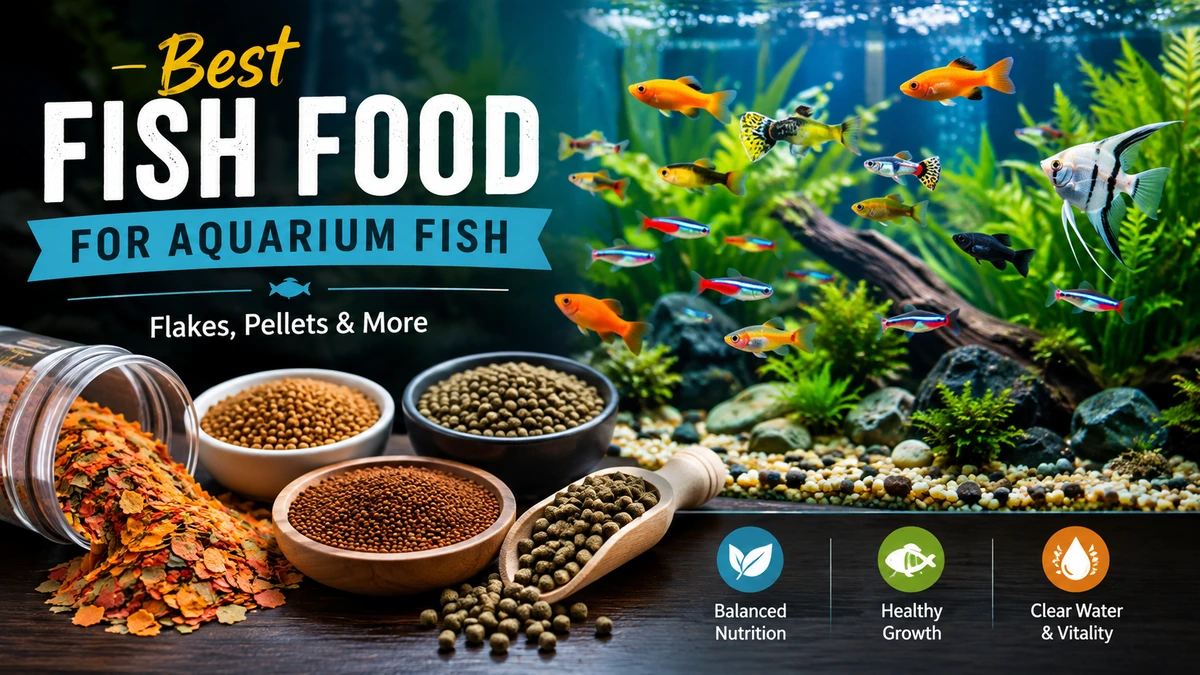
Choosing the best aquarium fish food can seem simple until you are faced with flakes, pellets, granules, wafers, and specialty formulas for different fish. The best fish food is not necessarily the most expensive one or the food with the biggest label claim. It is the food that matches your fish’s species, size, feeding behavior, and nutritional needs.
A good feeding routine can support healthy growth, body condition, coloration, and overall vitality. It can also help protect aquarium water quality because uneaten food quickly becomes waste. Veterinary guidance recommends choosing food appropriate for the fish’s species, age, and health needs, while avoiding overfeeding.
In this guide, we explain the main types of aquarium fish food, how to choose between flakes and pellets, what to look for on a label, how much to feed, and which fish food options from PawTroveHub are worth considering.
What Makes a Good Fish Food?
A good aquarium diet provides the nutrients fish need while matching the way they naturally feed.
Fish generally need protein, fats, carbohydrates, vitamins, and minerals. The ideal balance varies according to the species and whether the fish is primarily herbivorous, omnivorous, or carnivorous.
When choosing fish food, focus on these factors:
- Species: Goldfish, tropical community fish, cichlids, and bottom feeders do not necessarily have the same dietary requirements.
- Fish size: Food particles should be small enough for your fish to comfortably eat.
- Feeding level: Some fish feed mainly at the surface, while others feed in mid-water or at the bottom.
- Food form: Flakes, granules, pellets, and sinking foods behave differently in the aquarium.
- Nutrition: Look for a formula appropriate for the fish rather than choosing based only on a marketing claim.
- Water quality: Food that is left uneaten can contribute to waste and deteriorating water quality.
The simplest rule is this: choose food for the fish you actually keep, not simply for the picture on the container. Aquarium Co-Op also emphasizes matching food type and texture to the preferences and feeding behavior of the fish.
Flakes vs. Pellets: Which Is Better?
There is no universal winner between flakes and pellets. The better choice depends on the fish in your aquarium.
Fish Flakes
Flakes are lightweight and usually float before gradually sinking. They are particularly convenient for many small community fish and surface or mid-water feeders.
They are easy to break into smaller pieces, which can be useful when feeding smaller fish. However, flakes can also break apart quickly, creating fine particles that become difficult for fish to eat and may contribute to waste if too much is added.
Best for: Many small community fish, surface feeders, and fish that readily accept floating foods.
Pellets and Granules
Pellets and granules are more compact and are available in different sizes and sinking rates. They can make portioning easier, and the right size can work very well for fish with larger mouths or for aquariums where more controlled feeding is preferred.
Micro pellets and small granules are particularly useful for small tropical fish because the particle size is easier for them to eat. PetMD notes that micro pellets are suitable for smaller fish and that pellets are available in both floating and sinking forms.
Best for: Fish that prefer compact foods, larger fish, controlled feeding, and tanks where a particular sinking rate is useful.
Sinking Foods
Sinking pellets and other bottom-feeding foods are useful when fish at the lower levels of the aquarium need access to food without competing with fast surface feeders.
This is particularly important in mixed aquariums containing bottom-dwelling fish. A sinking food can help distribute feeding opportunities across different levels of the tank.
Best for: Bottom feeders and community aquariums with fish occupying different feeding zones.
How to Choose the Best Aquarium Fish Food
Goldfish are omnivores and can eat both sinking and floating foods. A suitable goldfish formula should provide balanced daily nutrition while being easy for the fish to consume.
For goldfish that experience buoyancy problems, sinking pellets may be preferable to floating foods.
PawTroveHub option: Tetra Goldfish Flakes Fish Food
Tropical Community Fish
Tetras, guppies, danios, and many other small tropical community fish generally benefit from food that is appropriately sized for their mouths.
Small flakes, micro pellets, and small granules are practical options. In mixed tanks, it is often better to choose a food that even the smallest fish can comfortably consume rather than relying on oversized particles.
PawTroveHub option: Fluval Bug Bites Tropical Fish Food
Cichlids
Cichlids vary widely in size, feeding behavior, and nutritional needs, so choosing the right food should start with the specific species you keep. Medium and large cichlids generally need appropriately sized pellets or flakes, while smaller species do better with smaller food particles.
1. Tetra TetraCichlid Cichlid Flakes
A practical flake option for routine feeding, especially for cichlids that readily accept floating or slowly sinking flakes. The flake format also makes it easy to adjust portions for different fish sizes.
2. Fluval Bug Bites Cichlid Formula Pellets
A pellet-based option designed for cichlids, making it a useful choice for owners who prefer a more compact food format. The pellet size should be matched to the size of the fish to make feeding easier and reduce uneaten food.
Bottom-Feeding Fish
Bottom feeders can lose out when faster fish consume floating food before it reaches the lower areas of the aquarium.
A sinking food can help solve this problem by delivering food directly to the bottom of the tank.
PawTroveHub option: Aqueon Shrimp Pellets Sinking Fish Food
Koi and Pond Goldfish
Pond fish have different feeding conditions from indoor aquarium fish, so choose food specifically intended for pond species.
Floating pellets are commonly used for koi and goldfish because they are easy to observe during feeding and allow owners to monitor how much food the fish are consuming.
PawTroveHub option: API Pond Fish Food
Best Fish Food Options from PawTroveHub
The following products are already listed in the PawTroveHub Fish Food category and cover several common feeding needs.
| Fish Food | Food Type | Best For | Why Consider It |
|---|---|---|---|
| Tetra Goldfish Flakes | Flakes | Goldfish | Convenient daily food for goldfish |
| Fluval Bug Bites Tropical Fish Food | Small granules | Small and medium tropical fish | Protein-rich formula with an easy-to-use granule format |
| Aqueon Shrimp Pellets | Sinking pellets | Bottom feeders, tropical fish, goldfish | Helps deliver food below the surface |
| Tetra TetraCichlid Cichlid Flakes | Flakes | Cichlids | Designed for routine cichlid feeding |
| Fluval Bug Bites Cichlid Formula Pellets | Pellets | Medium and large cichlids | Larger, compact food format for cichlids |
| API Pond Fish Food | Floating pellets | Koi and goldfish | Designed for pond feeding |
1. Tetra Goldfish Flakes Fish Food
A practical choice for goldfish owners looking for a dedicated flake food for routine feeding. Its flake format also makes it easy to portion according to the size and number of fish in the tank.
Best for: Goldfish
2. Fluval Bug Bites Tropical Fish Food
This small-granule tropical fish food is a strong option for small and medium tropical fish. The compact granules can be easier to portion than loose flakes and are well suited to everyday feeding.
Best for: Small and medium tropical community fish
3. Aqueon Shrimp Pellets Sinking Fish Food
Sinking pellets are useful when food needs to reach fish feeding near the bottom of the aquarium. This makes the product particularly useful for community tanks containing bottom-feeding fish.
Best for: Bottom feeders and mixed community tanks
4. Tetra TetraCichlid Cichlid Flakes
A cichlid-focused flake option for owners who prefer a traditional flake format for daily feeding.
Best for: Cichlids
5. Fluval Bug Bites Cichlid Formula Pellets
A pellet-format option for medium and large cichlids. The more compact form can make portioning easier while providing food designed specifically for cichlid feeding needs.
Best for: Medium and large cichlids
6. API Pond Fish Food
A floating pellet food designed for koi and goldfish kept in ponds. Floating food also makes it easier to watch feeding activity and avoid continuously adding food when fish have already had enough.
Best for: Koi and pond goldfish
Fish Food Comparison at a Glance
| Product | Best For | Food Form | Feeding Position | Ideal Use |
|---|---|---|---|---|
| Tetra Goldfish Flakes | Goldfish | Flakes | Surface / mid-water | Everyday goldfish feeding |
| Fluval Bug Bites Tropical | Small & medium tropical fish | Small granules | Mid-water | Daily community feeding |
| Aqueon Shrimp Pellets | Bottom feeders | Sinking pellets | Bottom | Mixed tanks and bottom feeders |
| Tetra TetraCichlid | Cichlids | Flakes | Surface / mid-water | Everyday cichlid feeding |
| Fluval Bug Bites Cichlid | Medium & large cichlids | Pellets | Mid-water / sinking | Cichlid feeding |
| API Pond Fish Food | Koi & goldfish | Floating pellets | Surface | Pond feeding |
How Much Fish Food Should You Feed?
Overfeeding is one of the easiest mistakes for aquarium owners to make.
A useful starting point is to provide only an amount your fish can consume within a short feeding period rather than adding large portions. PetMD recommends feeding roughly what fish can consume within two to five minutes, while also removing uneaten food promptly.
You should also adjust the amount according to:
- The number and size of fish
- Their species and feeding behavior
- Their age
- Water temperature and seasonal conditions where applicable
- How quickly they actually consume the food
Do not keep adding food simply because the fish continue swimming toward the surface. Many fish learn to associate the owner with feeding and may appear eager even after they have received enough.
How Often Should You Feed Aquarium Fish?
Many pet fish are fed once or twice a day, depending on their species and circumstances.
A consistent schedule can make feeding easier to manage and helps you notice changes in appetite.
A practical routine is:
Feed a small portion → observe the fish → stop when they have eaten enough → remove obvious leftovers.
If your fish routinely leave food behind, reduce the amount at the next feeding rather than continuing to add more.
Can You Feed Fish Only One Type of Food?
For many aquarium fish, a quality staple food can form the foundation of the diet. Depending on the species, however, variety can be useful.
Prepared pellets or flakes can provide a practical nutritional base, while occasional complementary foods may add variety or enrichment. PetMD notes that frozen, live, and freeze-dried foods are generally best used as complements rather than as the sole diet for most pet fish.
The key is not to create an unnecessarily complicated feeding routine. Start with an appropriate staple food, then add other foods only when they serve a purpose for the species you keep.
How to Avoid Cloudy Water From Fish Food
Cloudy water is not always caused by the food itself, but overfeeding and uneaten food are common contributors.
Fine particles from food can remain suspended in the water, while uneaten food can break down and add waste. The Aquarium Life’s 2026 fish-food guide also highlights the relationship between food particle size, feeding behavior, and water clarity.
To reduce the risk:
- Feed smaller portions.
- Choose food that matches the size of your fish.
- Avoid adding more food simply because fish appear hungry.
- Watch how quickly the food is consumed.
- Remove obvious leftovers rather than allowing them to remain in the tank.
- If a food consistently breaks apart into excessive dust, consider a more cohesive food format.
A good fish food should work with your aquarium routine, not create extra maintenance.
What Should You Look for on a Fish Food Label?
Do not choose a fish food solely because its label says “premium,” “color enhancing,” or “clear water.”
Instead, consider:
Appropriate Protein
Protein is important for growth, tissue maintenance, repair, immune function, and energy. The ideal level depends on the species and dietary type.
Suitable Ingredients
Look at the overall ingredient list rather than focusing on a single ingredient or percentage.
The food should be appropriate for the fish you keep and provide a balanced diet suitable for that species.
Correct Particle Size
This is one of the easiest things to overlook.
A food that is nutritionally appropriate can still be a poor choice if the fish cannot comfortably eat it. Smaller fish generally need smaller particles, while larger fish can handle larger pellets or flakes.
Correct Sinking or Floating Behavior
Food should reach the fish that need it.
Surface feeders may benefit from floating flakes or pellets, while bottom feeders generally need sinking foods.
Common Fish Feeding Mistakes to Avoid
Feeding Too Much
More food does not mean healthier fish. Excess food contributes to waste and can negatively affect water quality.
Choosing Food That Is Too Large
A large pellet may be nutritious, but that does not help a fish with a small mouth.
Feeding Every Fish the Same Way
A tank containing surface feeders and bottom feeders may need more than one food format.
Relying Only on Marketing Claims
“Color enhancing” or “clear-water” wording should not replace checking whether the food actually matches your fish.
Ignoring Uneaten Food
If food is consistently left behind, the portion size or food type may need to be adjusted.
What Is the Best Fish Food for a Community Aquarium?
For a typical community aquarium, there is no single food that is perfect for every fish.
A small-granule tropical staple can be a practical starting point for many small and medium community fish. If your aquarium also contains bottom feeders, adding a sinking food can help ensure those fish receive food at their feeding level.
For example, a setup using Fluval Bug Bites Tropical Fish Food as a daily staple together with Aqueon Shrimp Pellets for bottom feeders may make more sense than trying to force every fish to eat the same food.
The important point is to match the food’s size, texture, and feeding behavior to the fish in your aquarium.
Final Takeaway
The best fish food is the one that fits your fish—not simply the one with the most impressive label.
Start by identifying your fish species, mouth size, feeding level, and dietary needs. Then choose an appropriately sized food in a form your fish can actually eat. Feed small portions, watch how quickly the food disappears, and avoid allowing leftovers to accumulate.
For a convenient starting point, explore PawTroveHub’s Fish Food category to compare the selected options for goldfish, tropical fish, cichlids, bottom feeders, koi, and other common aquarium needs.
You can also explore the broader Fish Products section for aquarium tanks, filters, heaters, lighting, water conditioners, cleaning equipment, decorations, fish health products, and aquarium gravel and substrate.
Choose the right food, feed thoughtfully, and your aquarium routine becomes much easier to manage.