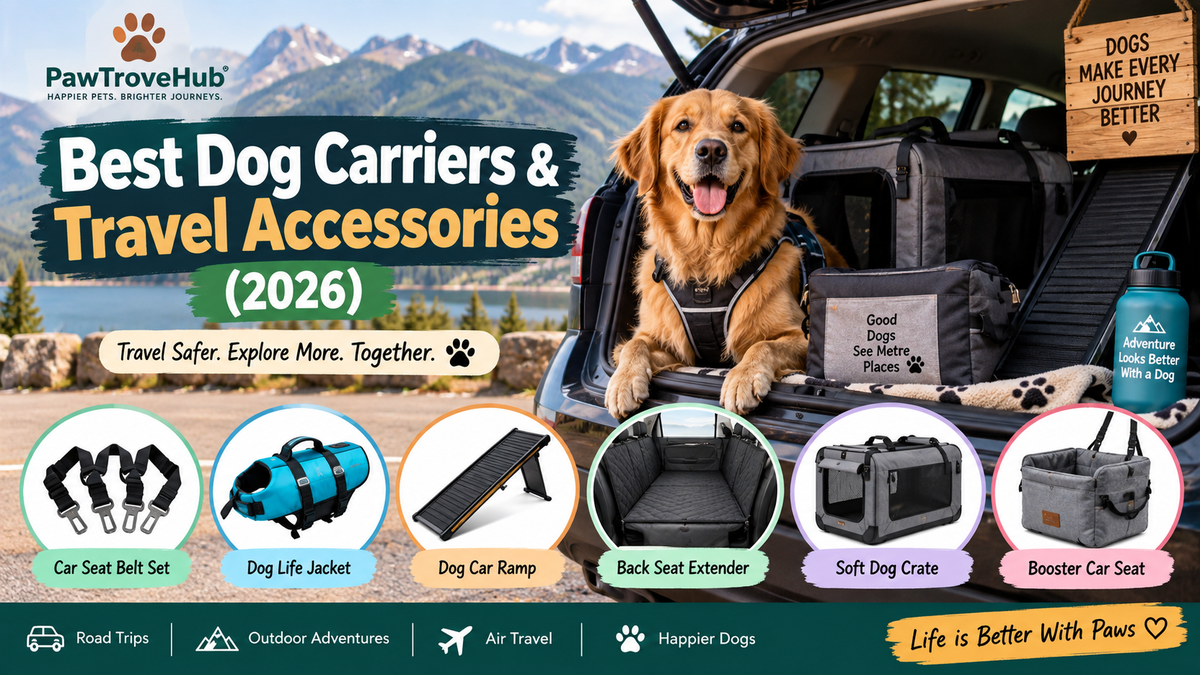
Traveling with your dog can be much easier when you have the right equipment. Whether you’re taking a short drive, planning a road trip, visiting family, or preparing for air travel, the right carrier and travel accessories can help keep your dog comfortable, secure, and easier to manage.
The best dog carriers and travel accessories depend on your dog’s size, the type of journey, and how you plan to travel. A small dog may benefit from a comfortable travel carrier or booster seat, while a larger dog may need a secure restraint, travel crate, or ramp.
In this guide, we’ll look at useful dog travel products for 2026 and explain what to consider before choosing travel gear for your dog.
Best Dog Carriers and Travel Accessories for 2026
There is no single travel product that works for every dog. Your dog’s size, age, mobility, temperament, and travel method should all influence your choice.
Here are six useful dog travel products to consider for different situations.
1. 3-Piece Adjustable Dog Car Seat Belt Set
For dogs that regularly travel by car, a 3-Piece Adjustable Dog Car Seat Belt Set can be a practical addition to your travel gear.
A properly fitted restraint can help prevent your dog from moving freely around the vehicle and distracting the driver. It can also help keep your dog more secure during sudden braking or other unexpected movements.
This type of travel accessory can be particularly useful for everyday trips to the veterinarian, park, groomer, or family visits.
Always follow the manufacturer’s instructions and make sure the restraint is appropriate for your dog’s size and the vehicle you’re using.
2. Outward Hound Granby Splash Dog Life Jacket
If your travels include swimming, boating, lakes, beaches, or other water activities, a dog life jacket can be an important piece of travel equipment.
The Outward Hound Granby Splash Dog Life Jacket is designed for dogs participating in water activities and can provide additional buoyancy and visibility.
A life jacket can be especially useful when your dog is unfamiliar with swimming or when you’re spending time around deeper water.
Always supervise your dog around water, even when they are wearing a life jacket.
3. Portable Folding Dog Car Ramp
Getting into and out of a vehicle can be difficult for some dogs, particularly older dogs, smaller dogs, or dogs that should avoid repeated jumping.
A Portable Folding Dog Car Ramp provides an alternative to asking your dog to jump into an SUV, truck, or other elevated vehicle.
A folding design can also make storage easier when the ramp is not being used.
Before purchasing a ramp, consider its weight capacity, dimensions, surface traction, folding mechanism, and whether it is long enough to create a comfortable incline for your vehicle.
4. URPOWER Hard Bottom Back Seat Extender
For longer car journeys, giving your dog more usable space in the back seat can make the trip more comfortable.
The URPOWER Hard Bottom Back Seat Extender is designed to create additional usable space across the rear seating area while helping protect the vehicle interior.
A back-seat extender can be useful when your dog needs more room to settle down during longer drives. It can also help reduce gaps where a dog might otherwise slip between seats.
However, extra space should not replace appropriate restraint or other safety equipment. Your dog’s travel setup should keep them appropriately secured while the vehicle is moving.
5. Amazon Basics Portable Folding Soft Dog Crate
A soft travel crate can be useful when you need a portable enclosed space for your dog at home, while traveling, or during visits away from home.
The Amazon Basics Portable Folding Soft Dog Crate features a folding design that can make transportation and storage more convenient.
When choosing a travel crate, size is particularly important. Your dog should have enough room to stand, turn around, and lie down comfortably rather than being forced into a cramped position.
A soft crate may be convenient for suitable dogs and situations, but always consider your dog’s behavior, strength, and the conditions of the journey before relying on one.
6. Petsfit Dog Booster Car Seat
Small dogs can sometimes benefit from an elevated travel seat that gives them a dedicated space in the vehicle.
The Petsfit Dog Booster Car Seat is designed for dogs that are suitable for this type of travel setup and can provide a more defined seating area during car journeys.
When selecting a booster seat, pay attention to the manufacturer’s size and weight recommendations and use the included safety features according to the instructions.
A booster seat should be considered part of an overall car-safety setup rather than simply a way to give your dog a better view through the window.
How to Choose the Right Dog Carrier for Travel
Choosing a dog carrier should start with your dog rather than the appearance of the carrier.
Your dog’s measurements, the length of your trip, and your method of transportation all matter.
The American Kennel Club recommends considering your dog’s measurements when selecting a carrier. A properly sized carrier should give the dog enough room to stand, turn around, and lie down comfortably.
For more guidance, see this educational resource on how to choose the right dog carrier.
Measure Your Dog Before Buying
Measure your dog’s length, shoulder height, and weight and compare those measurements with the manufacturer’s sizing information before buying.
Do not assume that a carrier is suitable simply because your dog can physically fit inside it. A carrier intended for extended travel should provide enough space for comfortable movement.
Consider the Type of Travel
The best carrier for a short car trip may not be the best choice for air travel.
For car journeys, you may prioritize:
- Secure containment
- Comfort
- Easy cleaning
- Portability
- Appropriate restraint
- Good ventilation
For air travel, you also need to consider airline-specific carrier dimensions and requirements.
Look for Good Ventilation
Airflow is an important consideration when choosing enclosed travel equipment.
Look for a design that provides sufficient ventilation without compromising security. Mesh panels and appropriately positioned ventilation openings can help maintain airflow.
Check Closures and Construction
A carrier should remain securely closed during normal use.
Before purchasing, examine the quality of zippers, latches, clips, doors, handles, and attachment points. Dogs that are strong, anxious, or determined to escape may require more secure construction than a calm dog.
Best Dog Travel Accessories for Car Trips
Choosing the best dog carriers and travel accessories for car travel depends on your dog’s size, travel habits, and the type of vehicle you use.
Car travel is one of the most common reasons people purchase dog travel equipment.
A good setup may include a suitable restraint or carrier along with accessories that improve comfort and convenience.
For example, a dog car seat belt can help keep a dog appropriately restrained, while a back-seat extender can provide additional usable space. A ramp can help dogs that have difficulty jumping into elevated vehicles.
If you’re building a complete setup, explore our selection of dog accessories for other everyday gear.
The American Kennel Club recommends using an appropriate crate or restraint system for dog car travel and getting dogs accustomed to their travel equipment before a longer journey.
What to Pack for a Dog Road Trip
The right travel gear is only part of preparing your dog for a journey.
A practical dog road-trip checklist can include:
- Dog carrier, crate, or appropriate restraint
- Food and water
- Portable food and water bowls
- Leash and collar
- Identification information
- Waste bags
- Familiar blanket or bedding
- Favorite toy
- Treats
- Cleaning supplies
- Any necessary medications
- Basic first-aid supplies
Packing familiar items can also help your dog settle into an unfamiliar environment.
For longer trips, remember to plan regular breaks so your dog has opportunities to stretch, drink, and relieve themselves.
You can also explore our wider selection of dog products when preparing for travel or adding useful supplies to your dog’s everyday routine.
Dog Travel Safety Tips
Travel safety should come before convenience.
Secure Your Dog Before Driving
A dog should not be allowed to move freely around the vehicle while you are driving.
Use an appropriate carrier, crate, harness, or restraint system designed for your dog’s size and situation.
Get Your Dog Used to Travel Equipment
Don’t wait until the morning of a long journey to introduce a new carrier or crate.
Allow your dog to investigate the equipment at home. Leave the carrier open and encourage positive interactions with treats, praise, or familiar bedding.
Gradually increase the amount of time your dog spends inside.
This can help make the carrier a familiar part of the travel routine rather than something your dog only sees immediately before a stressful journey.
Take Regular Breaks
Long journeys require planning.
Give your dog suitable opportunities to stretch, drink water, and take bathroom breaks. The exact frequency will depend on the dog, journey, weather, and individual needs.
Never Leave Your Dog Unattended in a Hot Vehicle
Temperatures inside vehicles can rise rapidly.
Never assume that cracking a window makes an unattended vehicle safe for your dog. If you need to leave the vehicle, make arrangements that keep your dog safe rather than leaving them alone inside.
Avoid Letting Your Dog Ride With Their Head Outside the Window
Although many dogs appear to enjoy it, allowing a dog to put their head outside a moving vehicle can expose them to injury and other hazards.
Keep your dog appropriately secured inside the vehicle.
Flying With a Dog: What to Know
Air travel requires more preparation than a typical car journey.
Airlines can have different rules for pets, including carrier dimensions, weight restrictions, reservations, documentation, and whether pets are permitted in the cabin at all.
Before purchasing an airline travel carrier, check the current requirements of the airline you intend to use.
The Federal Aviation Administration explains that individual airlines determine whether pets may travel in the passenger cabin and that approved pet containers must meet applicable carry-on and stowage requirements.
You can review the FAA guidance on flying with pets before making your travel arrangements.
Do Not Assume a Carrier Is Airline Approved
A carrier being marketed as a “travel carrier” does not automatically mean it will meet the requirements of your particular airline.
Check the airline’s current specifications before purchasing.
Pay attention to:
- Maximum carrier dimensions
- Combined pet and carrier weight limits
- Under-seat requirements
- Ventilation requirements
- Reservation requirements
- Documentation
- Destination-specific rules
Requirements can change, so verify them directly with the airline before traveling.
Dog Travel Accessories for Different Dogs
Different dogs have different travel needs.
Small Dogs
Small dogs may be suitable for carriers, booster seats, or other compact travel solutions depending on their size and the type of journey.
Large Dogs
Larger dogs generally require equipment designed for their size and weight. Depending on the situation, this may include a suitable crate, vehicle restraint, or other appropriate travel system.
Older Dogs
Older dogs or dogs that have difficulty jumping may benefit from a vehicle ramp.
A ramp can reduce the need to repeatedly jump into or out of an elevated vehicle.
Dogs That Enjoy Water Activities
If your dog accompanies you around pools, lakes, beaches, or boats, a properly fitted dog life jacket can be an additional safety item.
Remember that flotation equipment does not eliminate the need for supervision.
How to Make a Dog Carrier More Comfortable
A carrier should be introduced gradually.
Start by allowing your dog to explore it at home with the door open. Place familiar bedding or another safe, familiar item inside.
Reward calm interactions and gradually increase the amount of time your dog spends inside.
Before a long trip, practice short journeys when possible. This gives you an opportunity to identify problems with sizing, ventilation, comfort, or your dog’s reaction to the equipment before the actual trip.
Comfort also depends on temperature, ventilation, movement, and the length of the journey.
Dog Travel Checklist
Before leaving home, quickly check that you have:
- Correctly sized carrier, crate, or restraint
- Leash and collar
- Identification information
- Food
- Water
- Portable bowls
- Treats
- Waste bags
- Familiar bedding
- Favorite toy
- Cleaning supplies
- Required medications
- Travel documents
- Airline documentation if applicable
Having these items ready before departure can make the trip much less stressful.
For more general pet shopping needs, visit our best pet products collection.
Frequently Asked Questions
What is the best dog carrier for travel?
The best dog carrier depends on your dog’s size, weight, temperament, and travel method. A suitable carrier should provide enough room for comfortable movement and should match the requirements of your particular journey.
How do I choose the right size dog carrier?
Measure your dog’s length, shoulder height, and weight and compare those measurements with the manufacturer’s sizing guide. Your dog should have enough space to stand, turn around, and lie down comfortably.
What should I look for in a dog travel carrier?
Look for appropriate sizing, ventilation, secure closures, suitable construction, convenient handling, and features that match your travel method.
Are dog carriers safe for car travel?
A suitable carrier can be part of a safe car-travel setup when it is appropriately sized and secured according to the manufacturer’s instructions. Dogs should not be allowed to move freely around the vehicle while it is moving.
What should I pack when traveling with my dog?
Bring your dog’s food, water, bowls, leash, identification, waste bags, familiar bedding, toys, necessary medications, and appropriate travel equipment. Longer trips may require additional supplies.
Can I take my dog on an airplane in a carrier?
Some airlines allow eligible dogs to travel in an approved carrier in the cabin, while other situations may require different arrangements. Rules vary by airline and destination, so always verify the current requirements before booking.
Final Thoughts
Choosing the best dog carriers and travel accessories means matching the equipment to your dog’s size, needs, and method of travel.
For car journeys, appropriate restraints, booster seats, back-seat protection, and ramps can make travel more manageable. For longer trips, a suitable travel crate can provide a familiar enclosed space. For water-based adventures, a properly fitted life jacket can be a useful addition.
Before buying any travel product, check the manufacturer’s sizing and weight requirements and consider how the equipment will actually be used.
Most importantly, prepare your dog before the journey. Introducing travel equipment gradually, practicing shorter trips, and planning ahead can help make travel more comfortable for both you and your dog.
If you’re preparing for your next adventure, explore our dog accessories and dog products for more useful pet essentials.
Affiliate Disclosure: Some links on this page are affiliate links. If you purchase through an eligible link, PawTroveHub may earn a commission at no additional cost to you.