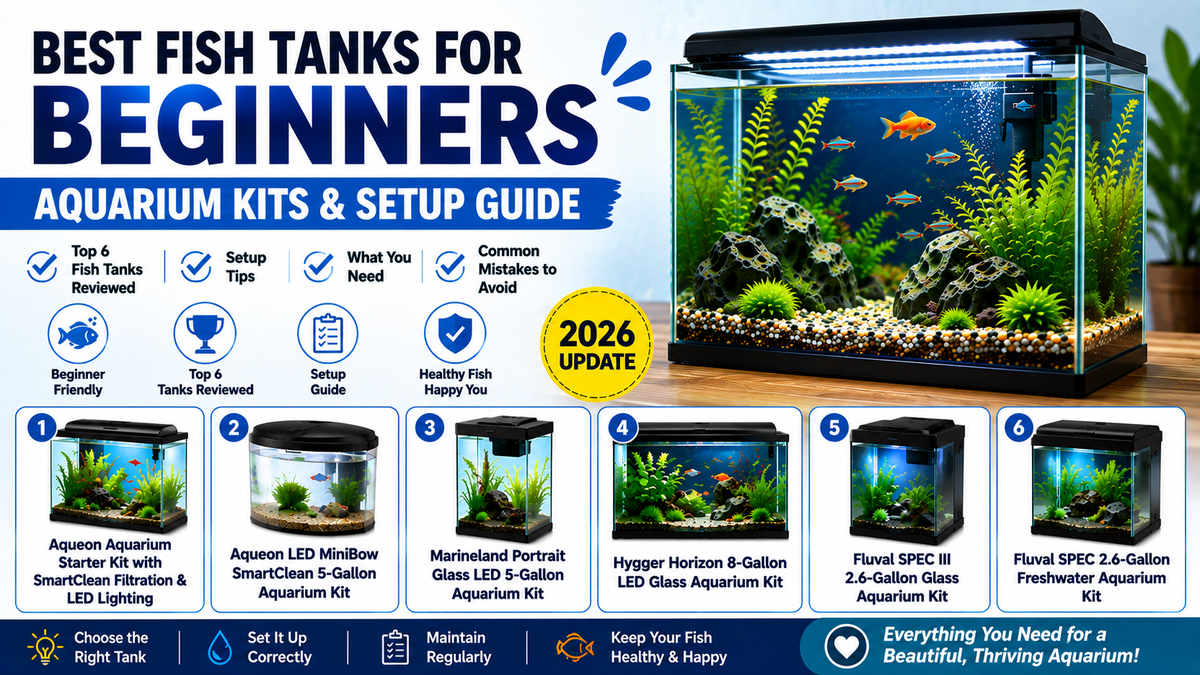
Choosing your first fish tank can feel surprisingly complicated. There are compact aquariums, glass tanks, aquarium kits with built-in filtration and lighting, and larger setups designed for different types of fish.
The best fish tank for a beginner is not necessarily the smallest or cheapest option. It should provide an appropriate environment for the fish you plan to keep, include useful equipment, and be practical for you to maintain.
In this guide, we compare six fish tanks and aquarium kits and explain what to look for before buying. You’ll also learn what equipment you may need, how to prepare a new aquarium, and which beginner mistakes are worth avoiding.
Quick Answer: Which Fish Tank Is Best for Beginners?
For many first-time fish keepers, an aquarium kit can be a convenient starting point because several important components are included together.
The Aqueon Aquarium Starter Kit with SmartClean Filtration & LED Lighting is a strong option to consider if you want a more complete starter setup.
For a compact 5-gallon option, the Aqueon LED MiniBow SmartClean 5-Gallon Aquarium Kit and Marineland Portrait Glass LED 5-Gallon Aquarium Kit are worth comparing.
If you are specifically looking for a compact Fluval aquarium, the Fluval SPEC III 2.6-Gallon Glass Aquarium Kit and Fluval SPEC 2.6-Gallon Freshwater Aquarium Kit are two options to compare carefully.
The Hygger Horizon 8-Gallon LED Glass Aquarium Kit provides more water volume than the 2.6- and 5-gallon choices in this list.
Important: Tank size should always be chosen according to the adult size, number, behavior, and environmental requirements of the fish you intend to keep. A smaller aquarium is not automatically easier to maintain.
6 Best Fish Tanks for Beginners in 2026
1. Aqueon Aquarium Starter Kit with SmartClean Filtration & LED Lighting
Best for: Beginners who want a more complete starter setup
A starter kit can simplify the first aquarium purchase by combining the tank with important equipment.
The Aqueon Aquarium Starter Kit with SmartClean Filtration & LED Lighting is worth considering if you want a setup that includes filtration and lighting rather than having to select every component separately.
For a first-time fish keeper, having several basic components together can make the initial setup more straightforward.
However, always check the current product listing to confirm the tank size, included equipment, and other specifications before buying.
Check the current Amazon listing:
Aqueon Aquarium Starter Kit with SmartClean Filtration & LED Lighting
2. Aqueon LED MiniBow SmartClean 5-Gallon Aquarium Kit
Best for: Beginners looking for a compact 5-gallon aquarium kit
The Aqueon LED MiniBow SmartClean 5-Gallon Aquarium Kit combines a 5-gallon aquarium with LED lighting and SmartClean filtration.
Its compact format can be attractive if you have limited space, while the included equipment can reduce the number of separate aquarium components you need to purchase.
The important thing is to choose inhabitants that are actually appropriate for the tank. Don’t buy a tank simply because its size fits your available space and then try to find fish afterward.
Research the adult requirements of the species you want to keep before making your final choice.
Check the current Amazon listing:
Aqueon LED MiniBow SmartClean 5-Gallon Aquarium Kit
3. Marineland Portrait Glass LED 5-Gallon Aquarium Kit
Best for: Beginners who want a compact glass aquarium with LED lighting
The Marineland Portrait Glass LED 5-Gallon Aquarium Kit is another compact option for beginners who want a glass aquarium with integrated LED lighting.
A 5-gallon aquarium can be convenient where space is limited, but smaller aquariums require careful attention to stocking and maintenance.
Don’t assume that a smaller aquarium means less work. Smaller water volumes can provide less room for mistakes when feeding, stocking, temperature, or water quality goes wrong.
Choose compatible fish and maintain the aquarium consistently.
Check the current Amazon listing:
Marineland Portrait Glass LED 5-Gallon Aquarium Kit
4. Hygger Horizon 8-Gallon LED Glass Aquarium Kit
Best for: Beginners who want more room than a compact 5-gallon setup
The Hygger Horizon 8-Gallon LED Glass Aquarium Kit provides more water volume and display space than the smaller options in this guide.
That extra space may give you more flexibility when planning an appropriate freshwater setup, arranging decorations, and selecting suitable inhabitants.
Before purchasing, check the current Amazon listing for the exact dimensions, included equipment, and current configuration.
As always, select the aquarium based on the needs of the fish rather than choosing fish simply because they fit the aquarium.
Check the current Amazon listing:
Hygger Horizon 8-Gallon LED Glass Aquarium Kit
5. Fluval SPEC III 2.6-Gallon Glass Aquarium Kit
Best for: Very compact aquarium setups where the intended inhabitants are appropriate
The Fluval SPEC III 2.6-Gallon Glass Aquarium Kit is designed for people looking for a compact aquarium with a small footprint.
Its compact size can be attractive when space is limited, but the small water volume means beginners need to be especially careful about stocking, water quality, temperature, and maintenance.
Before choosing a tank this small, research the specific species you plan to keep and make sure the aquarium meets their requirements.
A small aquarium should never be treated as a universal beginner tank.
Check the current Amazon listing:
Fluval SPEC III 2.6-Gallon Glass Aquarium Kit
6. Fluval SPEC 2.6-Gallon Freshwater Aquarium Kit
Best for: Shoppers comparing compact Fluval freshwater aquarium options
The Fluval SPEC 2.6-Gallon Freshwater Aquarium Kit is another compact option for people considering a small freshwater aquarium.
If you’re comparing it with the Fluval SPEC III, look carefully at the current Amazon listings to confirm the exact configuration and equipment included with each product.
With any aquarium of this size, careful fish selection and consistent maintenance are particularly important.
Check the current Amazon listing:
Fluval SPEC 2.6-Gallon Freshwater Aquarium Kit
How to Choose the Right Fish Tank for a Beginner
1. Start With the Fish, Not the Tank
One of the easiest beginner mistakes is buying an aquarium first and then trying to find fish that fit it.
A better approach is to decide what type of fish you want to keep first.
Consider:
- Adult fish size
- Number of fish
- Swimming behavior
- Temperature requirements
- Water-quality requirements
- Compatibility with other species
- Required swimming space
- Feeding and care requirements
Different fish have very different needs, so there isn’t one aquarium size that is perfect for every beginner.
2. Consider Tank Size Carefully
Tank size affects how much water is available to dilute waste and how quickly environmental conditions can change.
Very small aquariums can be less forgiving because a relatively small amount of waste or uneaten food can have a greater effect on the overall system.
That doesn’t mean every beginner needs a huge aquarium. It means you should choose a size based on the species and stocking plan rather than convenience alone.
If you have enough space, a somewhat larger appropriate aquarium can often be easier to manage than an extremely small one.
3. Look at Filtration
A filter is one of the most important pieces of aquarium equipment.
Filtration helps remove waste and debris while supporting biological filtration and water circulation.
When buying an aquarium kit, check:
- What type of filter is included
- Whether it is appropriate for the aquarium
- How the filter media is maintained
- How easy it is to access
- Whether replacement media is readily available
A good filtration system is helpful, but it does not replace water changes, testing, and responsible stocking.
4. Check Lighting and Temperature Requirements
Aquarium lighting allows you to see your fish and can also be important if you plan to keep live plants.
Temperature requirements depend on the fish species.
Some tropical fish need warmer, controlled water, while other species have different temperature requirements.
If your fish require heated water, you’ll generally need an appropriate heater and thermometer so you can control and monitor the temperature.
Don’t set the temperature based on a generic aquarium rule. Research the requirements of the species you plan to keep.
5. Think About Long-Term Maintenance
A good beginner aquarium is one you can realistically maintain.
Before buying, consider whether you’ll be able to:
- Perform regular water changes
- Clean algae
- Maintain the filter
- Test the water
- Monitor temperature
- Feed appropriately
- Replace necessary supplies
The most attractive aquarium isn’t necessarily the best choice if it becomes difficult to maintain.
What You Need Besides the Fish Tank
An aquarium kit may include several important components, but depending on the product and fish you choose, you may still need additional supplies.
Water Conditioner
Tap water may contain chlorine or chloramine, which can be harmful to fish.
Use an appropriate aquarium water conditioner according to the product instructions before introducing treated tap water to your aquarium.
Water Test Kit
A water test kit helps you monitor important aquarium parameters.
Testing is especially important when establishing a new aquarium, adding fish, or investigating changes in fish behavior or water quality.
Don’t rely on water appearance alone. Water can look clear while still having unsuitable chemical conditions.
Heater and Thermometer
If your chosen fish require warmer water, you’ll need an appropriate aquarium heater.
A thermometer lets you monitor the actual temperature instead of relying on room temperature or guesswork.
Substrate
Gravel, sand, or another aquarium-appropriate substrate provides a base for the aquarium.
Choose substrate according to your fish, plants, and overall setup.
Decorations and Plants
Aquarium-safe rocks, caves, driftwood, and plants can provide structure and hiding areas for appropriate fish.
If you use live plants, make sure the lighting and substrate are suitable for the plants you choose.
Avoid decorations with sharp edges or materials that could affect water quality.
Maintenance Tools
A few basic tools can make aquarium care easier:
- Gravel vacuum
- Algae scraper or cleaning tool
- Aquarium bucket
- Fish net
- Water-testing supplies
You can explore more aquarium and fish-related products in the PawTroveHub Fish Products collection.
For products across all of PawTroveHub’s pet categories, visit the PawTroveHub Products page.
Simple Beginner Aquarium Setup
Step 1: Choose a Safe Location
Place the aquarium on a stable, level surface capable of supporting its filled weight.
Keep it away from direct sunlight, drafts, and locations with sudden temperature changes.
You should also have enough space around the aquarium for filter equipment, electrical connections, and routine maintenance.
Step 2: Prepare the Aquarium
Rinse the aquarium and inspect it before use.
Do not use household soaps or detergents on aquarium equipment because residues can be harmful to fish.
Step 3: Add Substrate and Decorations
Add your chosen substrate and arrange decorations or plants.
It’s easier to plan the layout before the aquarium is completely filled.
Step 4: Install the Equipment
Install the filter, heater if required, thermometer, and lighting according to the manufacturer’s instructions.
Make sure equipment is installed safely before operating it.
Step 5: Fill and Condition the Water
Fill the aquarium with the appropriate water and add an aquarium water conditioner according to its instructions.
Tap water should be treated appropriately before fish are exposed to it.
Step 6: Establish the Correct Temperature
If your fish require heated water, set up the heater and use a thermometer to confirm that the aquarium reaches the appropriate temperature.
Different species have different requirements.
Step 7: Cycle the Aquarium
Don’t rush this stage.
A new aquarium needs biological filtration to become established before it can safely support fish.
During cycling, beneficial bacteria develop that help process fish waste.
Test the water and monitor ammonia and nitrite rather than assuming the tank is ready after a fixed number of days.
Step 8: Test the Water
Water testing is particularly important during the establishment of a new aquarium.
Use appropriate tests to monitor ammonia, nitrite, nitrate, pH, and other parameters relevant to your fish.
The aquarium should be considered ready based on appropriate water conditions and established biological filtration—not simply because the tank has been running for a certain number of days.
Step 9: Add Fish Responsibly
Once the aquarium is properly established, introduce compatible fish carefully.
Avoid adding too many fish at once and continue monitoring the water after introducing new inhabitants.
Responsible stocking helps make the aquarium easier to maintain over the long term.
Beginner Fish Tank Mistakes to Avoid
Choosing a Tank Only Because It Looks Good
An attractive aquarium can be a great addition to your home, but appearance shouldn’t be the main deciding factor.
The tank must meet the needs of the fish.
Choosing the Smallest Possible Tank
A small aquarium may seem easier because it takes up less space.
However, less water volume can mean less stability and less room for mistakes.
Choose the appropriate tank for the species instead of automatically choosing the smallest option.
Overstocking
Adding too many fish can increase waste and make water quality more difficult to manage.
Research the adult size and requirements of every fish before adding it.
Adding Fish Too Quickly
A newly filled aquarium may look clean and ready, but it may not yet have established biological filtration.
Cycling and water testing are important before fish are introduced.
Skipping Water Treatment
Don’t assume that tap water is automatically safe for fish.
Use an appropriate water conditioner whenever required.
Overfeeding
Uneaten food contributes to waste and can negatively affect water quality.
Feed appropriately for the species and avoid adding more food simply because the fish appear eager to eat.
Ignoring Water Testing
Clear water does not necessarily mean healthy water.
Regular testing provides information you cannot get by simply looking at the aquarium.
Replacing All Filter Media at Once
Beneficial bacteria can live on filter media.
Follow the manufacturer’s maintenance instructions and avoid unnecessarily removing all biological filtration at once.
Frequently Asked Questions
What size fish tank is best for beginners?
There is no single perfect tank size for every beginner.
The appropriate size depends on the species, adult size, number of fish, behavior, and environmental requirements.
A larger appropriate aquarium can often provide more stability than an extremely small aquarium, but the correct choice should always be based on the fish.
Is a 5-gallon fish tank good for beginners?
A 5-gallon aquarium can be suitable for certain appropriate setups, but it is not suitable for every fish.
Research the species first and confirm that the aquarium provides enough space and suitable conditions.
Are aquarium kits worth it?
Aquarium kits can be convenient because they may combine the aquarium with equipment such as filtration and lighting.
They’re particularly useful for beginners who don’t want to select every component separately.
However, always check exactly what is included and whether the equipment meets the requirements of your intended setup.
Do all fish tanks need a heater?
No.
Heater requirements depend on the fish species and the temperature of the environment.
Many tropical fish require warmer, controlled water, while other fish have different temperature requirements.
How long does it take to cycle a new fish tank?
There isn’t one universal cycling time that applies to every aquarium.
The important thing is to monitor the aquarium’s water parameters and establish biological filtration rather than relying solely on a calendar.
Can I put fish in a new tank on the same day?
Adding fish immediately to an uncycled aquarium is not recommended.
A new aquarium needs time to establish biological filtration, and water testing should be used to determine when conditions are appropriate.
What happens if fish are added too soon?
An uncycled aquarium can develop harmful ammonia and nitrite levels.
This can stress fish and potentially cause serious health problems.
Cycling the aquarium and monitoring water conditions helps reduce this risk.
Is a bigger fish tank easier to maintain?
A larger appropriate aquarium can generally provide more water volume and greater stability than a very small aquarium.
However, a larger tank also requires more equipment, space, and maintenance.
The best choice is an appropriately sized aquarium that you can maintain consistently.
Helpful Aquarium Setup Resources
If you’d like additional educational guidance before setting up your aquarium, these resources are useful:
- VCA Animal Hospitals — Pet Fish: Setting Up an Aquarium
- PetMD — Setting Up a Freshwater Aquarium: Step-by-Step Guide
PetMD’s current guide covers aquarium equipment, water preparation, filtration, cycling, and other freshwater setup considerations.
Final Thoughts
The best fish tank for a beginner is the one that matches the fish you plan to keep, fits your available space, and is practical for you to maintain.
If you want a more complete starter setup, the Aqueon Aquarium Starter Kit with SmartClean Filtration & LED Lighting is worth comparing.
If you’re looking for a compact 5-gallon aquarium, the Aqueon LED MiniBow and Marineland Portrait are two options to consider.
For a larger option within this list, the Hygger Horizon 8-Gallon LED Glass Aquarium Kit provides more water volume than the smaller choices.
The two Fluval SPEC options are compact alternatives, but their smaller size makes careful species selection and maintenance particularly important.
Most importantly, don’t treat the aquarium purchase as the entire setup. Proper water conditioning, cycling, filtration, appropriate stocking, water testing, and regular maintenance are what help create a healthy environment for fish.
Choose the aquarium first according to the needs of its future inhabitants, then build the rest of the setup around those requirements.
Disclosure: PawTroveHub may earn a commission when you purchase through qualifying affiliate links. Product availability, pricing, specifications, and included equipment can change, so always check the current retailer listing before purchasing.