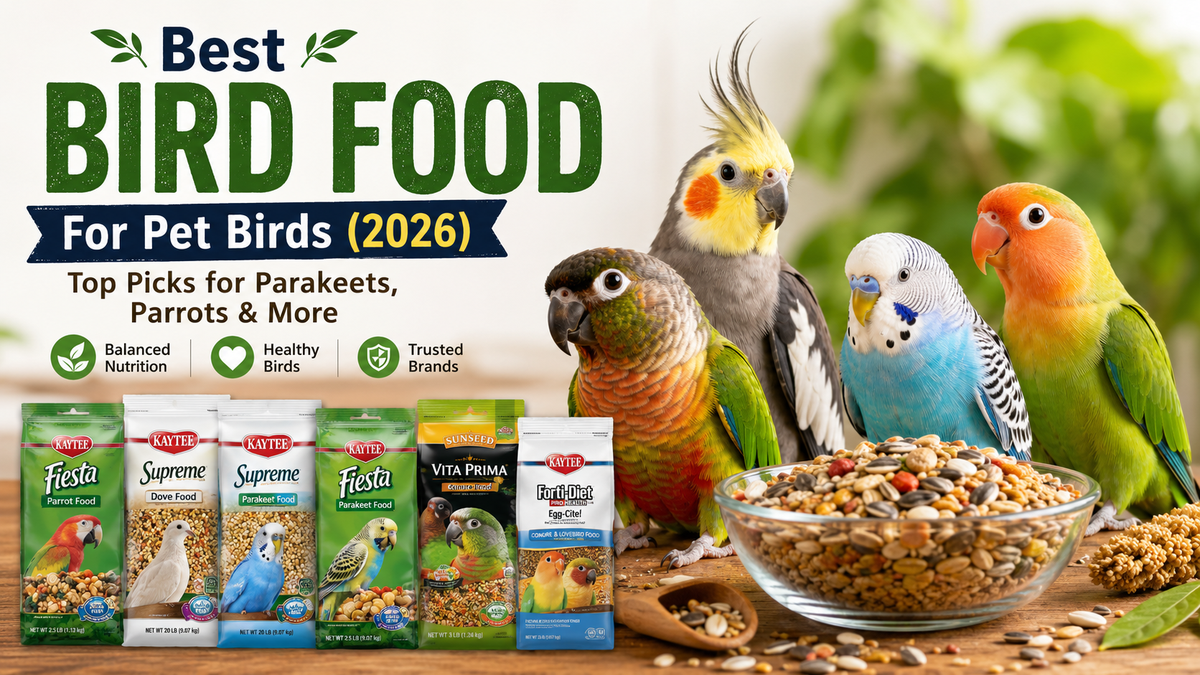
Choosing the best bird food is an important part of caring for a pet bird. But with so many seed mixes, formulated foods, and species-specific options available, it can be difficult to know which food is right for your bird.
Parakeets, parrots, doves, conures, and lovebirds do not all have identical dietary needs. The best starting point is to choose food appropriate for your bird’s species and then consider factors such as age, activity level, health, and veterinary guidance.
In this guide, we’ll compare several bird food options currently available through PawTroveHub and explain what to look for when choosing food for a companion bird.
Quick Answer: What Is the Best Bird Food?
There isn’t one bird food that is best for every pet bird.
A parakeet needs food intended for small parrots, while conures and lovebirds may benefit from formulas designed for those birds. Doves and larger parrots also have different dietary considerations.
Some of the bird food options currently available through PawTroveHub include:
- Kaytee Fiesta Parrot Food
- Kaytee Supreme Dove Food
- Kaytee Supreme Parakeet Food
- Kaytee Fiesta Parakeet Bird Food
- Sunseed Vita Prima Conure Food
- Kaytee Forti-Diet Pro Health Egg-Cite Conure & Lovebird Food
The most important factor is matching the food to your bird rather than simply choosing a product because it is popular or inexpensive.
What Should You Look for in Bird Food?
Before buying bird food, consider these factors.
1. Match the Food to Your Bird’s Species
This is one of the most important considerations.
Parakeets, conures, lovebirds, doves, and larger parrots can have different nutritional requirements. A species-specific or appropriately formulated food gives you a better starting point than choosing a random food mix.
Always check the product packaging to see which birds the food is intended for.
2. Consider the Type of Food
Bird food comes in different forms, including seed mixes and formulated diets.
Seed mixes are popular with many pet birds, but some birds may selectively eat their favorite seeds instead of consuming a balanced variety.
Formulated foods can provide more consistent nutrition, although the ideal diet depends on the bird’s species and individual circumstances.
If you’re changing your bird’s diet, make the transition carefully and seek veterinary guidance when necessary.
3. Check the Ingredients and Feeding Instructions
Don’t judge bird food only by its packaging.
Look at the intended species, feeding instructions, ingredients, and storage recommendations.
If your bird has a special dietary requirement or health concern, consult an avian veterinarian before making major dietary changes.
4. Choose a Practical Package Size
A large bag may be convenient for households with multiple birds, but it isn’t automatically the best choice for everyone.
Consider how quickly your bird will consume the food and whether you can store the remaining food properly.
For a single small bird, a smaller package may sometimes be more practical.
Best Bird Food Picks for Different Pet Birds
Here are six bird food options currently listed in the PawTroveHub Bird Food category.
1. Kaytee Fiesta Parrot Food, 2.5 lb
Parrots need food appropriate for their size and nutritional requirements. Kaytee Fiesta Parrot Food is one option to consider when shopping for a commercial food intended for parrots.
The 2.5-pound package may also be useful for owners who don’t want to immediately purchase a very large bag.
Best for: Parrot owners looking for a parrot-specific commercial food option.
View Kaytee Fiesta Parrot Food on Amazon
2. Kaytee Supreme Dove Food, 20 lb
Doves have dietary needs that differ from many parrots and parakeets, so a food specifically intended for doves can make shopping easier.
Kaytee Supreme Dove Food comes in a 20-pound package, which may be particularly practical for owners who keep multiple doves or regularly use larger quantities of food.
Best for: Dove owners looking for a dedicated dove food option.
View Kaytee Supreme Dove Food on Amazon
3. Kaytee Supreme Parakeet Food, 20 lb
Parakeets are small companion birds, and their food should be appropriate for their size and nutritional needs.
Kaytee Supreme Parakeet Food is specifically intended for parakeets and comes in a 20-pound package.
That larger size may make sense for owners with multiple birds. Owners with a single parakeet should consider how quickly they will use the food and how it will be stored.
Best for: Parakeet owners who want a dedicated parakeet food option.
View Kaytee Supreme Parakeet Food on Amazon
4. Kaytee Fiesta Parakeet Bird Food, 4.5 lb
Another option for parakeets is Kaytee Fiesta Parakeet Bird Food.
The 4.5-pound package offers a middle ground between a smaller package and a large bulk bag, making it worth considering for households that don’t want to purchase 20 pounds of food at once.
Best for: Parakeet owners who prefer a more moderate package size.
View Kaytee Fiesta Parakeet Bird Food on Amazon
5. Sunseed Vita Prima Conure Food, 3 lb
Conures are active companion parrots with dietary needs that differ from smaller birds such as parakeets.
Sunseed Vita Prima Conure Food is formulated for conures, making it an option to consider when shopping specifically for this type of companion bird.
The 3-pound package may also be convenient for owners who don’t need a large bulk bag.
Best for: Conure owners looking for a conure-specific commercial food option.
View Sunseed Vita Prima Conure Food on Amazon
6. Kaytee Forti-Diet Pro Health Egg-Cite Conure & Lovebird Food, 3 lb — 2-Pack
This food is formulated for conures and lovebirds, giving owners of either type of bird another species-specific option to consider.
The two-pack format can be useful for households that regularly go through bird food and want an additional package available.
Always check the current product instructions and make sure the food is appropriate for your individual bird.
Best for: Conure and lovebird owners looking for a food formulated for these birds.
View Kaytee Forti-Diet Pro Health Egg-Cite Conure & Lovebird Food on Amazon
How Much Bird Food Should You Give Your Bird?
There is no universal feeding amount that works for every pet bird.
The appropriate amount can depend on:
- Species
- Body size
- Age
- Activity level
- Type of food
- Current diet
- Health and nutritional requirements
Follow the feeding instructions provided with the food and pay attention to your bird’s normal eating habits and body condition.
If your bird suddenly eats significantly more or less than usual or experiences noticeable weight changes, consult an avian veterinarian.
Should Birds Eat Only Seeds?
Seeds are commonly included in bird diets, but feeding only the seeds a bird prefers isn’t necessarily a balanced approach.
Some birds may pick out their favorite ingredients from a mixed diet. This can result in an uneven intake of nutrients.
A properly formulated commercial diet can help provide more consistent nutrition, while appropriate fresh foods may also form part of a bird’s overall diet depending on its species and individual needs.
The correct approach varies between birds, so don’t assume that a diet suitable for one species is automatically suitable for another.
How to Store Bird Food Properly
Proper storage helps maintain food quality and reduces the risk of contamination.
Keep bird food:
- In a cool, dry location
- Away from direct sunlight
- Protected from moisture
- In a clean, appropriate container
- Away from insects and household pests
- According to the manufacturer’s storage instructions
Don’t continue feeding food that has become damp, moldy, contaminated, or noticeably unusual in smell or appearance.
When purchasing large bags, think about how quickly your bird will consume the food. A smaller fresh package can sometimes be more practical than storing a large bag for an extended period.
Common Bird Feeding Mistakes to Avoid
Even a suitable bird food can cause problems if it is used incorrectly.
Choosing Food for the Wrong Species
A dove food isn’t automatically appropriate for a parakeet, and a parakeet food isn’t automatically appropriate for a large parrot.
Always check the intended species on the packaging.
Feeding Only Favorite Foods
Some birds may pick out their favorite ingredients and leave the rest.
If selective eating becomes a persistent problem, discuss your bird’s diet with an avian veterinarian.
Ignoring Freshness
Old or improperly stored food can lose quality or become contaminated.
Buy a sensible amount and store it properly.
Changing Food Too Quickly
Some birds are resistant to dietary changes.
If you need to introduce a new food, transition carefully and monitor your bird’s food intake. If the bird refuses the new diet or has health concerns, seek veterinary guidance.
Final Thoughts: Choosing the Best Bird Food
The best bird food isn’t necessarily the most expensive product or the one with the most attractive packaging.
Start with your bird’s species and nutritional requirements. Then choose an appropriate commercial food, follow the feeding instructions, store it correctly, and monitor your bird’s eating habits and overall condition.
For parakeets, parrots, doves, conures, and lovebirds, the products covered in this guide give you several species-specific options to compare.
You can compare the available options directly in our Bird Food category.
For cages, accessories, toys, and other bird-related products, visit the Bird Products category.
You can also explore all available pet product categories on our main Products page.
Bird Nutrition & Care Resources
Bird food is only one part of responsible companion-bird care. Nutrition, housing, hygiene, enrichment, exercise, and veterinary care all contribute to a bird’s wellbeing.
For additional educational information, the Association of Avian Veterinarians provides its Bird Owner Resources page, which includes species-specific pet bird care resources and a broader Bird Owner Resource Series.
For lovebird owners, VCA Animal Hospitals — Lovebirds: Feeding provides detailed information about lovebird nutrition and feeding.
For individual dietary concerns or major diet changes, consult an avian veterinarian.