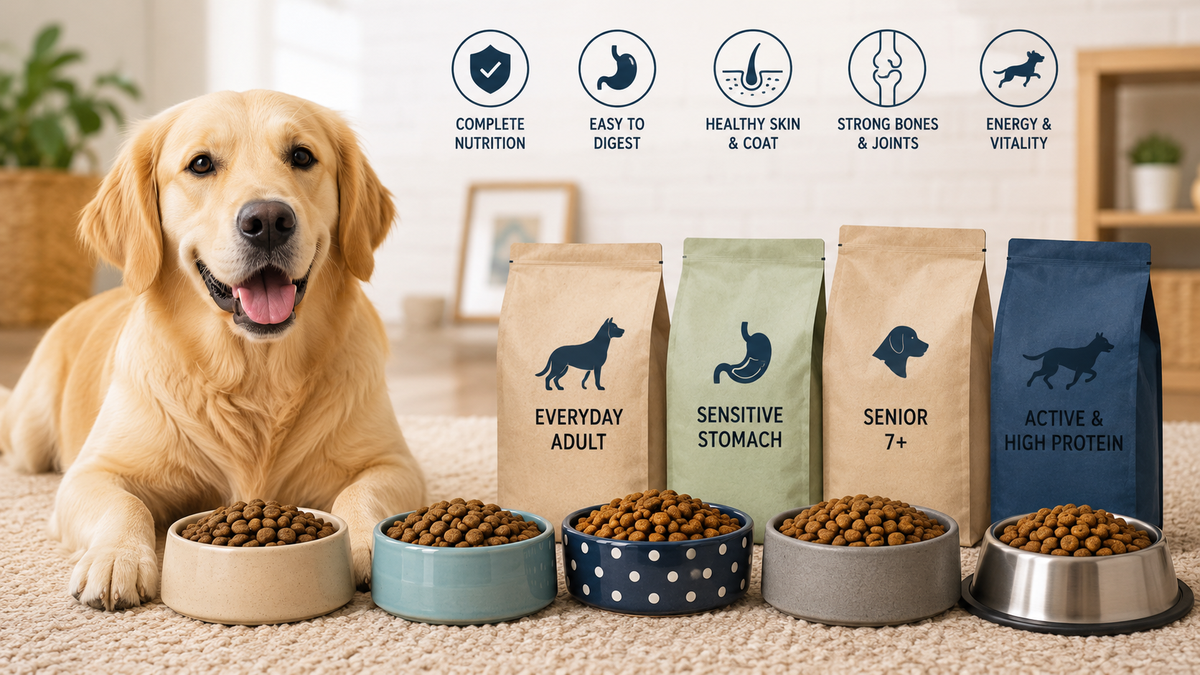
Choosing the best dog food is not simply about picking the most expensive bag or the brand with the longest ingredient list. The right choice depends on your dog’s age, size, activity level, dietary needs, and how well the food fits into their everyday routine.
To make the decision easier, we reviewed six dog food options that cover several common needs, including everyday adult nutrition, sensitive stomachs, senior dogs, active dogs, and higher-protein diets.
Quick Answer: What Is the Best Dog Food?
There is no single dog food that is perfect for every dog.
For everyday adult nutrition, Purina ONE Lamb & Rice Formula is a practical option to consider. Dogs with sensitive stomach or skin needs may prefer a formula such as Hill’s Science Diet Sensitive Stomach & Skin. Senior dogs can benefit from considering a food designed for their life stage, while active dogs may have different nutritional and calorie requirements.
Here are the six options covered in this guide:
- Purina ONE Lamb & Rice Formula Dry Dog Food
- Hill’s Science Diet Sensitive Stomach & Skin Adult Dry Dog Food
- Hill’s Science Diet Small Bites Adult 7+ Dry Dog Food
- Nutrish Rachael Ray Adult Dry Dog Food
- Blue Buffalo Wilderness Adult High-Protein Dry Dog Food
- VICTOR Hi-Pro Plus Dry Dog Food
The goal is not to declare one universal winner, but to help you narrow your choices based on what your dog actually needs.
How to Choose the Best Dog Food
Before buying a new dog food, consider these factors.
1. Your Dog’s Life Stage
Puppies, adult dogs, and senior dogs do not necessarily have the same nutritional requirements.
A growing puppy needs food formulated for growth, while adult dogs generally need a diet designed for adult maintenance. Senior dogs may benefit from formulas designed around their changing needs.
Always check the product label to make sure the food is appropriate for your dog’s life stage.
2. Your Dog’s Size and Activity Level
A small companion dog and a highly active large dog can have very different calorie requirements.
Think about your dog’s:
- Weight
- Breed or body size
- Daily activity
- Age
- Current body condition
- Typical portion size
The feeding instructions on the food package provide a useful starting point, but individual dogs can require different amounts.
3. Digestive and Dietary Sensitivities
If your dog has a sensitive stomach, digestive problems, food allergies, or another health concern, don’t choose food based only on marketing claims.
A veterinarian can help determine whether a particular diet is appropriate for your dog.
4. The Nutritional Adequacy Statement
Look at the nutritional adequacy statement on the package.
A complete and balanced food appropriate for your dog’s life stage is generally a better starting point than choosing a food simply because its ingredients sound appealing.
6 Dog Food Options Worth Considering
1. Purina ONE Lamb & Rice Formula Dry Dog Food
Best for: Everyday adult feeding
Purina ONE Lamb & Rice Formula is one of the straightforward options in this list for owners looking for an everyday dry dog food.
The formula features lamb as its first ingredient and is positioned around complete daily nutrition.
If you’re looking for a conventional dry food for an adult dog and want to compare an established option, this is a good place to start.
Check the current Amazon listing: Purina ONE Lamb & Rice Formula Dry Dog Food
2. Hill’s Science Diet Sensitive Stomach & Skin Adult Dry Dog Food
Best for: Dogs whose diet needs extra consideration for sensitive stomachs and skin
Some dogs do better when their diet is chosen specifically around digestive or skin-related sensitivities.
Hill’s Science Diet Sensitive Stomach & Skin Adult Dry Dog Food is formulated with those considerations in mind, making it one of the more targeted options in this roundup.
If your dog regularly experiences digestive upset or you have concerns about their skin and coat, discuss dietary choices with your veterinarian before making a major change.
Check the current Amazon listing: Hill’s Science Diet Sensitive Stomach & Skin Adult Dry Dog Food
3. Hill’s Science Diet Small Bites Adult 7+ Dry Dog Food
Best for: Senior dogs age 7 and older
Older dogs can have different nutritional and feeding considerations than younger adults.
Hill’s Science Diet Small Bites Adult 7+ is specifically designed for dogs age seven and older and uses smaller kibble pieces that may be easier for some senior dogs to manage.
If your dog is entering their senior years, choosing a food designed for that life stage can be worth considering rather than automatically continuing with an adult formula.
Check the current Amazon listing: Hill’s Science Diet Small Bites Adult 7+ Dry Dog Food
4. Nutrish Rachael Ray Adult Dry Dog Food
Best for: Adult dogs needing a straightforward everyday option
Nutrish Rachael Ray Adult Dry Dog Food is another everyday adult option in this roundup.
The featured recipe uses real beef as its first ingredient and includes pea and brown rice.
For owners comparing several mainstream dry foods, this gives you another option to evaluate based on your dog’s nutritional requirements, preferences, and budget.
Check the current Amazon listing: Nutrish Rachael Ray Adult Dry Dog Food
5. Blue Buffalo Wilderness Adult High-Protein Dry Dog Food
Best for: Owners specifically looking for a higher-protein, grain-free option
Blue Buffalo Wilderness Adult High-Protein Dry Dog Food is positioned as a high-protein, grain-free formula with real chicken as the first ingredient.
However, grain-free does not automatically mean better for every dog.
When comparing foods, focus on whether the complete diet is appropriate for your individual dog rather than choosing a product simply because a particular ingredient is trending.
Check the current Amazon listing: Blue Buffalo Wilderness Adult High-Protein Dry Dog Food
6. VICTOR Hi-Pro Plus Dry Dog Food – 40 lb
Best for: Active dogs and puppies needing a higher-protein formula
VICTOR Hi-Pro Plus is a higher-protein dry dog food designed for active dogs and puppies.
For particularly active dogs, calorie and protein requirements can differ substantially from those of a less active household pet.
That makes it important to compare your dog’s actual lifestyle and nutritional needs rather than assuming that a higher-protein food is automatically the best choice.
Check the current Amazon listing: VICTOR Hi-Pro Plus Dry Dog Food – 40 lb
Best Dog Food by Need
If you want a quick way to narrow the choices:
| Dog’s situation | Option to consider |
|---|---|
| Everyday adult nutrition | Purina ONE Lamb & Rice |
| Sensitive stomach or skin considerations | Hill’s Science Diet Sensitive Stomach & Skin |
| Senior dog age 7+ | Hill’s Science Diet Small Bites Adult 7+ |
| Everyday adult alternative | Nutrish Rachael Ray Adult |
| Higher-protein, grain-free preference | Blue Buffalo Wilderness |
| Active dogs and puppies | VICTOR Hi-Pro Plus |
This table is a starting point, not a medical or veterinary recommendation.
Dry Food vs. Wet Food: Which Is Better?
Both dry and wet dog food can have a place in a dog’s diet.
Dry food is convenient to store, easy to portion, and commonly used for everyday feeding. Wet food provides additional moisture and can be useful for dogs that prefer a different texture.
Some owners also combine dry and wet food.
The important point is to account for the total amount of food and calories your dog receives rather than treating each food as an addition to their normal daily portion.
How Much Dog Food Should You Feed?
There isn’t one correct amount for every dog.
Start with the feeding guidance provided on the food package and consider your dog’s:
- Weight
- Age
- Activity level
- Body condition
- Life stage
- Individual health needs
Monitor your dog’s weight and body condition over time.
If your dog is gaining or losing weight unexpectedly, or if you are unsure how much they should eat, speak with your veterinarian.
How to Switch Your Dog to a New Food
Avoid making a sudden change whenever possible.
A gradual transition can make it easier for your dog to adjust to a new diet.
A simple approach is to gradually increase the amount of new food while decreasing the old food over several days.
If your dog develops persistent vomiting, diarrhea, refuses food, or shows other concerning symptoms after a diet change, contact your veterinarian.
Common Dog Food Buying Mistakes
Choosing food only because it says “premium”
Marketing language does not tell you everything about whether a food is appropriate for your dog.
Ignoring life stage
Puppies, adults, and senior dogs can have different nutritional needs.
Overfeeding because your dog seems hungry
Dogs can continue asking for food even when they have received enough calories.
Use feeding guidance and your dog’s body condition as better indicators.
Changing food too quickly
A sudden dietary change can cause digestive upset in some dogs.
Assuming grain-free automatically means healthier
Grain-free is a dietary characteristic, not a universal quality guarantee.
Choose based on your dog’s complete nutritional needs.
When Should You Talk to a Veterinarian?
A veterinarian is especially important when your dog has:
- Ongoing digestive problems
- Food allergies or suspected intolerances
- Unexplained weight changes
- Kidney, liver, or other medical conditions
- Special nutritional requirements
- Persistent changes in appetite or thirst
A food that works well for one healthy dog may not be appropriate for another dog with different needs.
Final Thoughts
The best dog food is the one that provides appropriate, balanced nutrition for your dog’s life stage and individual needs.
For everyday adult feeding, Purina ONE Lamb & Rice and Nutrish Rachael Ray are two options worth comparing. For more specific needs, Hill’s Science Diet Sensitive Stomach & Skin, Hill’s Science Diet Small Bites Adult 7+, Blue Buffalo Wilderness, and VICTOR Hi-Pro Plus provide different directions to consider.
Don’t choose based on the front of the bag alone. Look at the nutritional information, feeding guidance, life-stage suitability, and your dog’s individual needs.
If you’re uncertain, your veterinarian can help you make a more informed decision.
Further Reading: Dog Nutrition
For additional evidence-based information about pet nutrition, see the WSAVA Global Nutrition Guidelines.
For practical information about feeding amounts, life stages, and general dog nutrition, see VCA Animal Hospitals’ Nutrition: General Feeding Guidelines for Dogs.
Affiliate disclosure: PawTroveHub may earn a commission from qualifying purchases made through affiliate links in this article. Product availability and prices can change on Amazon.