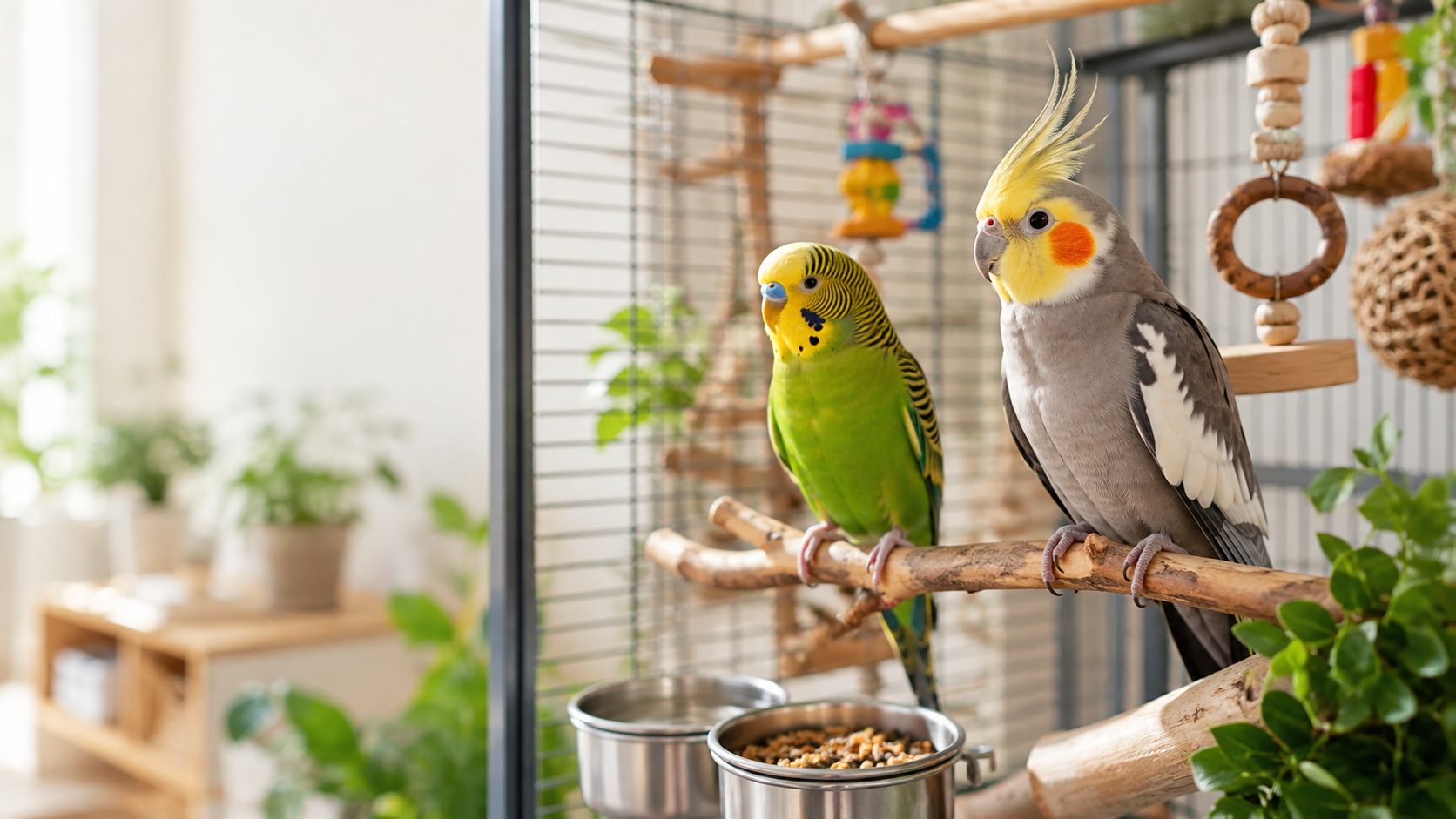
Pet bird care is essential for keeping your companion healthy, happy, and safe. Birds are intelligent, social, active, and full of personality, but they also have needs that are easy to overlook when you are new to bird ownership.
Good pet bird care involves more than a suitable cage and a bowl of food. Nutrition, exercise, enrichment, hygiene, sleep, social interaction, and household safety all matter when it comes to everyday bird care.
Whether you are preparing for your first budgie, cockatiel, lovebird, finch, canary, or another companion bird, this guide covers the basics you need to create a safe, comfortable, and enriching home.
Pet Bird Care: Start With the Right Bird for Your Lifestyle
Before bringing a bird home, take some time to learn about the species you are considering.
Birds can differ significantly in size, personality, noise level, lifespan, diet, and social needs. A bird that works well for one household may not be the right fit for another.
Pet Bird Care Basics
Think about:
- How much time you can spend with your bird each day
- How much space you can provide
- How much noise your household can comfortably handle
- The bird’s diet and housing requirements
- The ongoing cost of food, supplies, and veterinary care
- The long-term commitment involved
Understanding the needs of a species before bringing it home makes responsible bird care much easier.
Create a Safe and Comfortable Bird Habitat
Your bird’s cage is its main living space, so choosing the right one is one of the most important decisions you’ll make.
Look for a cage that gives your bird enough room to move around comfortably, stretch its wings, climb, and use toys without making the enclosure feel overcrowded.
Bar spacing matters too. It should be appropriate for the species so the bird cannot get its head or body caught between the bars.
A good habitat should include:
- A suitably sized cage
- Safe perches in different sizes and textures
- Separate food and water areas
- Enough open space for movement
- Appropriate toys and enrichment
- A design that is easy to clean
Cage placement is just as important. Birds usually benefit from being part of normal household activity, but their cage should be kept away from smoke, strong fumes, extreme temperatures, and other hazards.
For detailed bird cage hygiene guidance, see VCA Animal Hospitals’ bird cage hygiene guide.
For suitable habitats and cage options, explore Bird Cages & Habitats.
Feed a Balanced Diet
Food is one of the biggest factors in your bird’s long-term health.
Many companion birds should not live on a seed-only diet. Seed-heavy diets can be high in fat and may not provide enough of several important nutrients.
For many pet birds, a nutritionally complete formulated diet combined with suitable fresh foods can provide a more balanced approach. The ideal diet depends on the species, age, health, and lifestyle of the individual bird.
Depending on the species, a bird’s diet may include:
- A suitable formulated bird food
- Fresh vegetables
- Appropriate amounts of fruit
- Seeds or nuts in moderation
- Fresh drinking water
There is no single feeding formula that works perfectly for every bird. Some species have specialized dietary needs, so species-specific guidance is important.
If your bird is accustomed to a seed-based diet, avoid making a sudden switch. A gradual transition may be more appropriate, and the bird’s food intake and condition should be monitored during the process.
Explore suitable options in Bird Food.
Keep Treats Small and Useful
Treats can be a great addition to your bird’s routine, especially during training, but they should remain a small part of the overall diet.
Seeds and nuts are enjoyed by many birds, but they are also calorie-dense. Small amounts can be useful as occasional rewards when appropriate for the species.
Before giving your bird a new food, make sure it is safe. Some foods, fruit pits, and seeds can be harmful to birds.
For suitable reward options, visit Bird Treats.
Always Provide Fresh Water
Clean water should be available every day.
Birds can make a surprising mess around their water dishes, especially when they dip food into the water. As a result, water can become dirty quickly.
A simple daily routine helps:
- Replace the water every day
- Wash food and water dishes regularly
- Remove spoiled fresh food
- Check water bottles to make sure they work properly
- Keep feeding areas as clean as possible
Good hygiene is particularly important in a small enclosure where food, feathers, droppings, and water can easily end up in the same area.
For bowls, dishes, and other feeding supplies, see Bird Feeding.
Give Your Bird Plenty to Do
A cage with food, water, and a single toy is not enough enrichment for many pet birds.
Birds naturally spend time exploring, chewing, climbing, manipulating objects, and searching for food. Providing opportunities to perform some of these behaviors can make their daily environment much more interesting.
Useful enrichment can include:
- Chewable toys
- Foraging toys
- Shredding materials
- Climbing opportunities
- Different types of perches
- Food puzzles
- Supervised interaction and play
Foraging is especially useful because it encourages birds to work for food instead of simply eating from one easy-to-reach bowl.
Rotate suitable toys and activities from time to time to keep the environment interesting. Inspect toys regularly and remove anything that becomes damaged or unsafe.
Find enrichment ideas at Bird Toys.
Make Exercise Part of the Routine
Birds need opportunities to move and stay active.
Depending on the species and the individual bird, exercise can include climbing, walking, wing movement, playing, and supervised time outside the cage.
Before letting your bird out, make sure the room is safe.
Check for:
- Open doors and windows
- Ceiling fans
- Large uncovered windows or mirrors
- Other pets
- Hot surfaces
- Electrical hazards
- Toxic plants
- Small objects that could be swallowed
A bird-proofed room makes supervised exercise much safer.
What About Wing Clipping?
Wing trimming is not something every bird automatically needs.
There are different views on the subject, and the best decision can depend on the individual bird and its environment. Flight can provide important physical and behavioral benefits, but household safety must also be considered.
If you are unsure about wing trimming, discuss your bird’s situation with a qualified avian veterinarian.
For products that can support safe exercise and everyday bird care, explore Bird Accessories.
Keep Your Bird Clean and Well Groomed
Birds naturally spend a great deal of time preening, but they can still benefit from regular bathing opportunities.
Depending on the bird, bathing might involve a shallow dish of clean water, gentle misting, or another safe method that the bird is comfortable with.
Never force a bird to bathe.
It is also important to keep an eye on perches, nails, and other grooming needs. Perches should be inspected regularly and should provide suitable sizes and textures for the bird.
Be particularly careful with procedures such as nail or beak trimming. These are best handled by someone who understands bird anatomy and knows how to avoid injury.
For grooming products and supplies, visit Bird Grooming.
Use Positive Training and Build Trust
Training is not just about teaching tricks. It can make everyday life easier and help build trust between a bird and its owner.
Simple behaviors such as stepping onto a hand or perch, returning to the cage, or calmly entering a travel carrier can be useful in everyday situations.
Positive reinforcement can work well for many companion birds. Reward the behavior you want rather than relying on fear, punishment, or force.
Training sessions do not need to be long. Short, positive sessions are often easier for both the bird and the owner.
Social interaction matters too, but every bird has a different personality. Some birds enjoy frequent handling, while others need more time to become comfortable.
For helpful training products and supplies, explore Bird Training.
Give Your Bird a Consistent Sleep Schedule
Good sleep is easy to overlook, especially in a busy household.
Many companion birds benefit from a predictable period of quiet, dark, uninterrupted rest each night. The exact amount can vary depending on the species and the individual bird.
Try to keep bedtime reasonably consistent and reduce noise and bright light once your bird is settling down.
A separate sleeping area can be useful in homes that remain active late into the evening.
Watch for Changes in Your Bird’s Health
One of the best pet bird care habits you can develop is learning what is normal for your particular bird.
Birds can sometimes hide signs of illness, so changes in normal behavior deserve attention.
Potential warning signs can include:
- Reduced appetite
- Unusual weakness or inactivity
- Breathing difficulty
- Changes in droppings
- Sudden changes in vocalization
- Poor balance
- Significant weight loss
- Unusual feather damage or picking
- Sitting quietly for unusually long periods
- Spending excessive time at the bottom of the cage
These signs do not tell you exactly what is wrong, but they can indicate that veterinary attention is needed.
Regular veterinary checkups are also an important part of responsible bird care.
For bird wellness products and resources, visit Bird Health.
Protect Your Bird From Household Hazards
Some of the biggest dangers to pet birds are not inside the cage at all. They are found around the home.
Birds are particularly sensitive to airborne toxins, so smoke, fumes, and strong chemical vapors should be taken seriously.
Be Careful With Non-Stick Cookware
Some non-stick products use PTFE coatings that can release dangerous fumes when severely overheated. Birds are highly sensitive to inhaled toxins, and exposure can become a serious emergency.
For that reason, it is safest to keep pet birds away from kitchens and areas where cooking fumes may be present.
Other household hazards can include:
- Cigarette and tobacco smoke
- Aerosol sprays
- Strong cleaning chemicals
- Air fresheners
- Certain paints and fumes
- Toxic metals
- Hot cooking surfaces
- Unsafe household objects
- Toxic foods
When in doubt, check whether a product or substance is safe for birds before using it around them.
If you believe your bird has been exposed to toxic fumes, seek emergency veterinary help.
Keep the Cage and Surroundings Clean
Regular cleaning is a basic part of good bird care.
A dirty cage can become unpleasant very quickly when food, water, feathers, and droppings accumulate.
A simple routine works well for most owners.
Daily
- Replace drinking water
- Check food
- Remove spoiled fresh food
- Clean up obvious waste
- Observe your bird’s behavior
- Check toys and accessories for damage
Regularly
- Wash food and water dishes
- Clean cage surfaces
- Replace or clean cage liners
- Inspect perches
- Inspect toys and attachments
- Refresh enrichment
Use bird-safe cleaning practices and make sure surfaces are properly rinsed and dry before your bird comes into contact with them.
Travel Safely With Your Bird
A travel carrier is an important part of responsible bird ownership, even if you rarely travel.
Birds may need to leave home for veterinary appointments, emergencies, holidays, or a move.
Never allow a bird to move freely inside a moving vehicle.
A suitable carrier should be secure, well ventilated, and appropriately sized for the bird. It should also be positioned so it will not slide or tip during travel.
During hot weather, temperature deserves extra attention. Never leave a bird alone in a parked vehicle.
For suitable travel equipment, explore Bird Travel Carriers.
Essential Supplies for a New Bird
Preparing the right supplies before bringing a bird home makes everyday care much easier.
A basic setup may include:
- An appropriately sized cage
- Safe perches
- Food and water dishes
- Appropriate bird food
- Suitable treats
- Toys and enrichment
- Cleaning supplies
- A secure travel carrier
- Basic grooming supplies
- A digital gram scale for monitoring weight
You can find these essentials across PawTroveHub’s Bird categories, including Bird Accessories.
Common Pet Bird Care Mistakes to Avoid
Even caring owners can make mistakes, especially when they are new to bird ownership.
Relying on a seed-only diet
Seeds can be part of a bird’s diet, but for many companion birds they should not be the only source of nutrition.
Choosing a cage based only on appearance
A cage can look beautiful and still be too small or poorly designed for the bird that will live in it.
Providing too little enrichment
Birds need opportunities to explore, chew, forage, climb, and interact.
Ignoring household fumes
Smoke, aerosols, and overheated non-stick cookware can be dangerous to birds.
Waiting too long when something seems wrong
Because birds can hide illness, unusual changes are worth paying attention to.
Buying products without checking safety
Inspect cages, toys, perches, fasteners, and accessories regularly and replace damaged items.
A Simple Daily Bird-Care Routine
Good pet bird care starts with a consistent daily routine.
A consistent routine makes bird care easier and helps you notice problems early.
Morning
Refresh the water, provide food, check the cage, and take a moment to observe your bird. Look for anything unusual in its behavior, appetite, or appearance.
During the Day
Provide interaction, enrichment, and safe opportunities for exercise. Depending on the bird, this might include training, playtime, climbing, or supervised time outside the cage.
Evening
Clean food and water dishes, remove leftover fresh food, tidy the cage, and give your bird a calm environment for sleep.
The exact routine will depend on your bird’s species, age, health, and lifestyle.
Final Thoughts
Good bird care comes down to consistency.
Provide the right food, clean water, a safe habitat, regular enrichment, appropriate exercise, social interaction, enough rest, and protection from household hazards. Just as importantly, learn your bird’s normal habits so you can notice changes early.
Every species is different, so general bird-care advice should always be adapted to the individual bird when necessary. When something concerns you, an avian veterinarian is the best source of species-specific medical guidance.
With a little preparation and a good daily routine, you can create a home where your bird is safe, active, comfortable, and able to enjoy life.
Explore PawTroveHub’s Bird categories for helpful products covering Bird Food, Treats, Toys, Cages & Habitats, Grooming, Feeding, Health, Training, Travel Carriers, and Accessories.